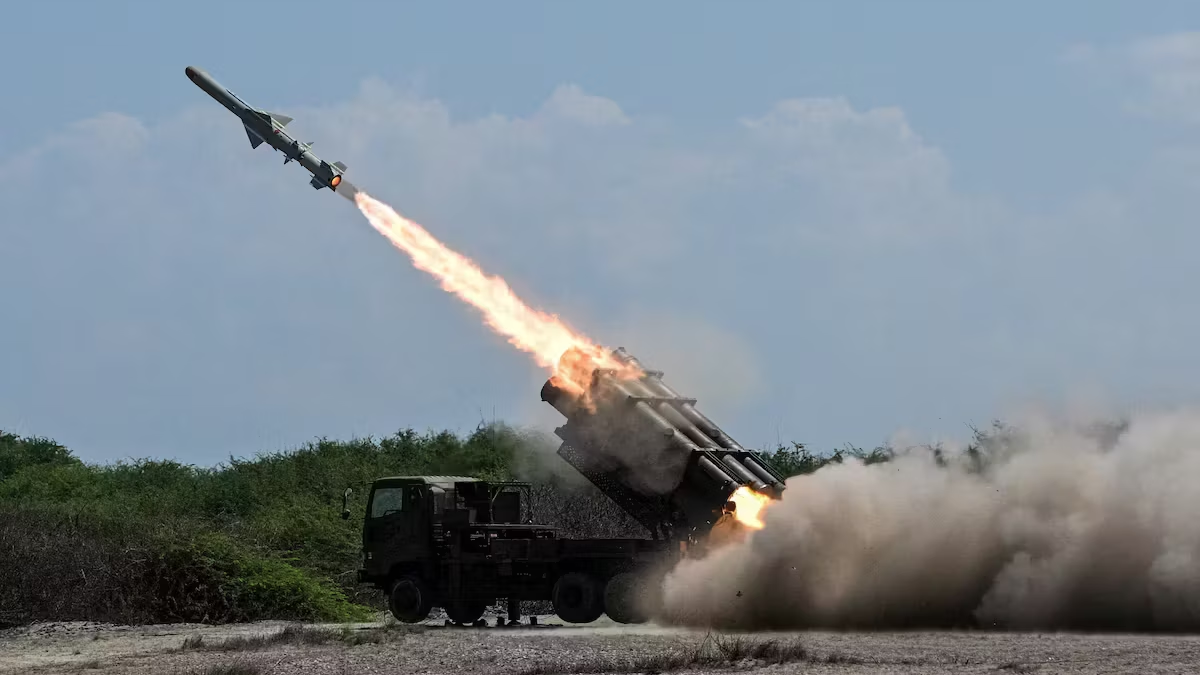
Japan conducted a missile launch as part of joint military exercises held with the United States, the Philippines, and Australia in northern Philippines, near the South China Sea. This show of force takes place amid rising regional tensions, notably with China.
The launch occurred during the annual « Balikatan » maneuvers, which traditionally bring together U.S. and Philippine forces but now include other partners. On this occasion, a Japanese Type 88 missile, fired by the Ground Self-Defense Forces, hit a disarmed Philippine Navy ship used as a target.
These exercises aim to strengthen military cooperation among allies and improve their response capabilities against potential threats in the Indo-Pacific region. They also illustrate Japan’s growing commitment to collective security operations beyond its borders.
The Philippine president monitored the operations remotely from a military headquarters, emphasizing the strategic importance given to these maneuvers. The participation of multiple countries reflects a shared desire to consolidate their deterrence capabilities.
China quickly reacted by criticizing these military activities, which it considers a source of destabilization in an area already marked by territorial disputes. Beijing regularly opposes such exercises, viewing them as directed against its interests.
In this tense climate, these military maneuvers appear as a strong signal sent by the allies, determined to assert their presence and coordination in a strategic region at the heart of geopolitical rivalries.