Brazil voted on Sunday to elect its president, in a very tight race between the outgoing head of state Luiz Inácio Lula da Silva and Senator Flavio Bolsonaro. Early partial results place the right-wing candidate ahead, but a second round remains likely.
With 10% of the ballots counted, Flavio Bolsonaro received 51% of the votes against 40.8% for Lula, according to figures published in real time by the Brazilian Superior Electoral Court. These very partial data do not predict the final result, especially since polls conducted before the election gave both candidates nearly identical voting intentions, around 45-46%.
Neither of the two favorites is expected to surpass the 50% threshold needed to win outright in the first round. A second round is therefore expected on October 25, where the latest projections showed Bolsonaro slightly ahead of Lula, 44% to 42%.
Lula, 80 years old, is seeking a fourth non-consecutive presidential term under the Workers’ Party banner. At his last rally in São Paulo, which gathered about 150,000 people according to organizers, he called to « defeat the far right, » presenting this election as a choice between « the democratic regime and barbarism. » His record is based on social programs, state-funded development, and income redistribution.
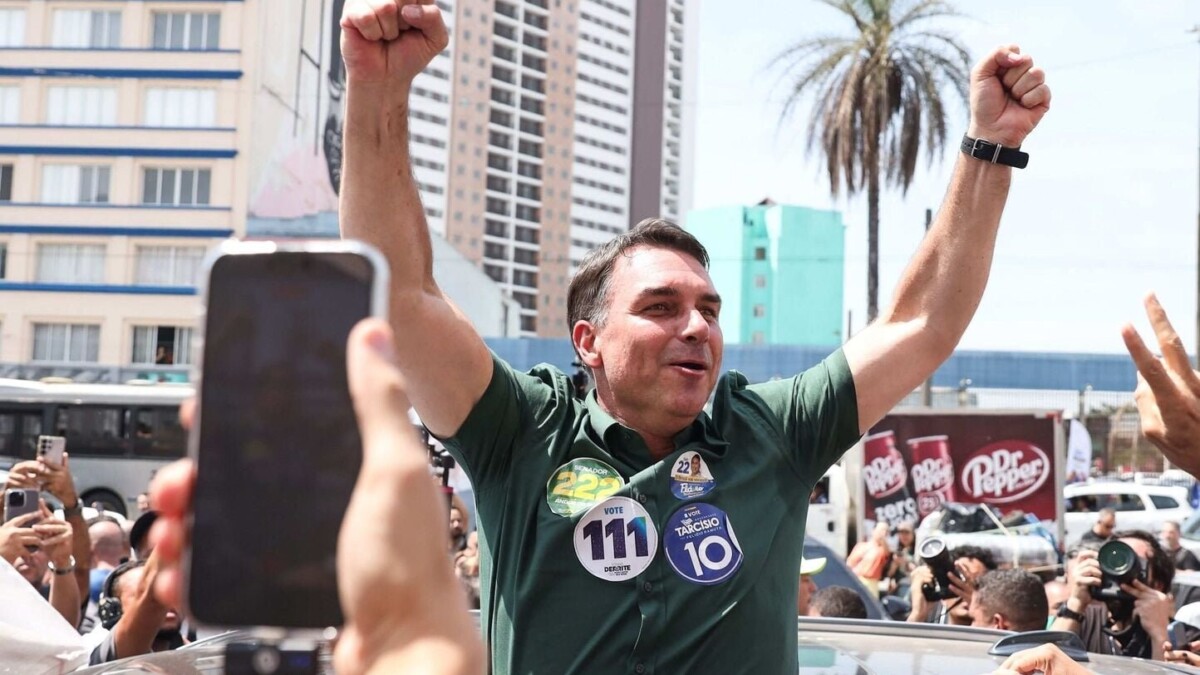
Opposing him, Flavio Bolsonaro, 45, senator from Rio de Janeiro since 2019, focused his campaign on security, tax cuts, and denouncing the cost of living under Lula’s presidency, which he calls « incompetent. » During a motorcycle parade in the São Paulo suburbs the day before the election, he brandished a portrait of his father before a crowd chanting « mito » — « legend » in Portuguese, a nickname given to Jair Bolsonaro by his supporters.
The shadow of the former president looms over the entire campaign. Jair Bolsonaro is currently serving a 27-year prison sentence for attempted coup d’état after his defeat to Lula in 2022, an election won by only 1.8 percentage points. Flavio has promised to pardon him if he becomes president. Lula’s team has exploited the ties between the Bolsonaros and Donald Trump, who last year imposed 50% tariffs on Brazilian imports in reaction to the coup trial, described as a « witch hunt » by the American president. Trump said he is following the election « very closely » without officially endorsing the senator.
Flavio Bolsonaro presents himself as « more moderate » than his father, while acknowledging that the latter remains « my compass, my point of reference. » However, both share common positions on loosening gun control and skepticism about human causes of climate change. The senator is also targeted by an investigation for corruption, money laundering, and tax fraud related to the financing of a biographical film about his father, accusations he denies.
The campaign took place in a climate of strong polarization, marked by disinformation operations on both sides, with massive dissemination of videos and images generated by artificial intelligence on social networks. The 160 million registered voters were also called to choose governors, senators, and deputies.