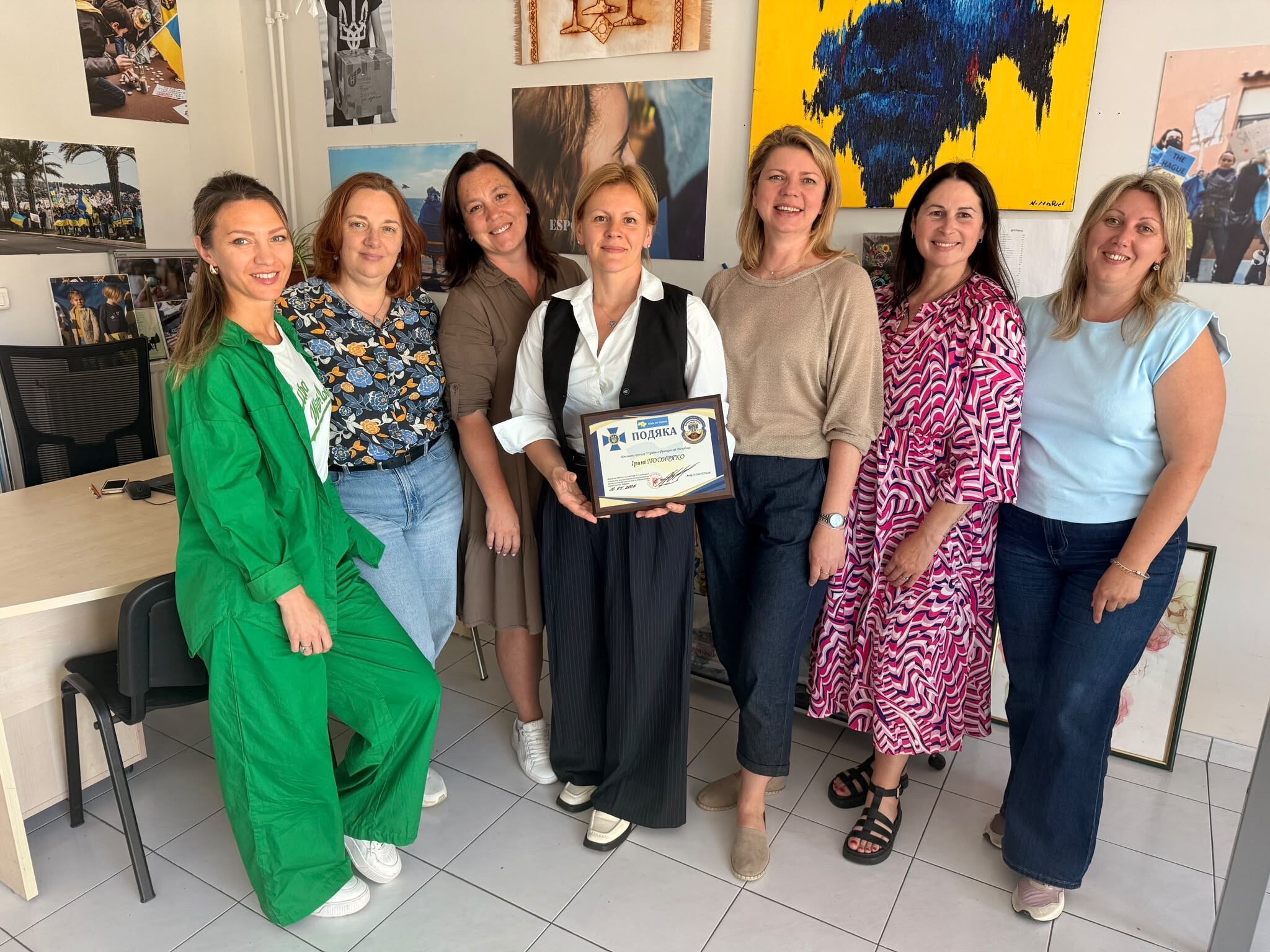

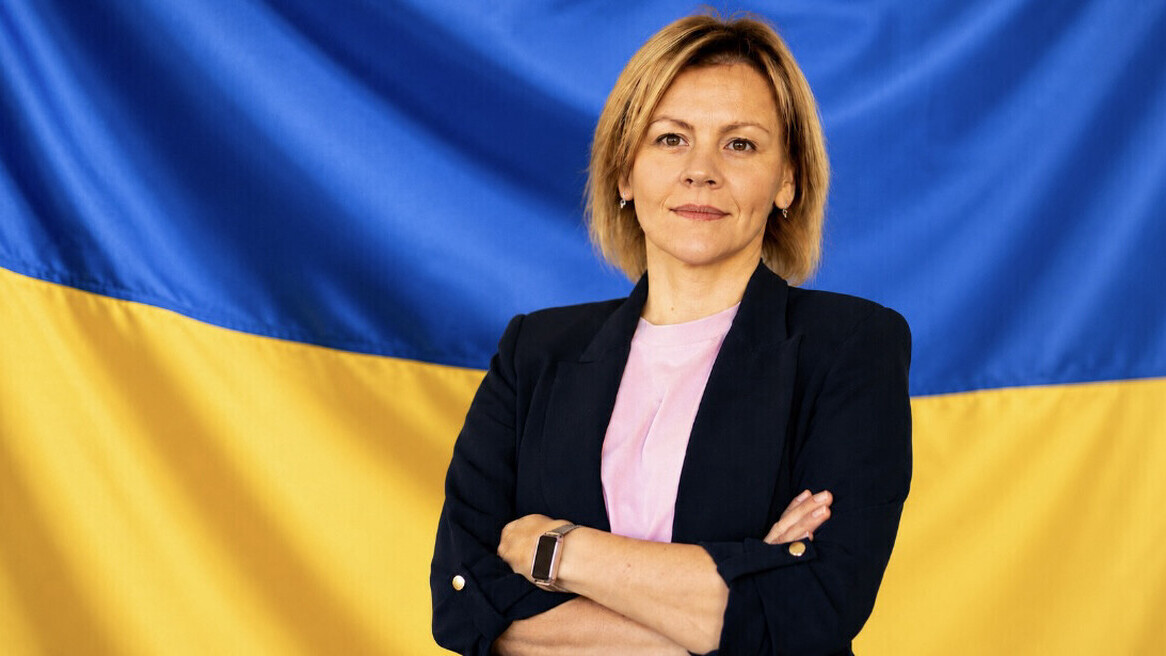
This Monday, August 24th, Ukraine celebrates 35 years of independence, proclaimed on August 24, 1991. This date takes on particular significance as the country has been facing a large-scale Russian invasion for over four years. On this occasion, Entrevue magazine interviewed Iryna Podyryako-Bourdelles, Honorary Consul of Ukraine in Nice and former President of the Franco-Ukrainian Association of the French Riviera. Having been involved with the Ukrainian community in the South of France for many years, she reflects on the meaning of this day, her career, her role as Honorary Consul, the war, the French perspective on Ukraine, and the future of her country.
Walid Harfouch: It is August 24, 2026, Ukraine's Independence Day. Does this date still have the same meaning today as it did before the war?
Iryna Podyryako-Bourdelles: Before the Great War, August 24th was a commemoration. It was a public holiday, a day of flags and concerts. We celebrated something we took for granted. Today, it's no longer a celebration. It's a state of mind. It's a front line. Because today, words have changed their weight. The word "independence," the word "freedom"—before, they were concepts. Beautiful, abstract. Today, they have a price. And we know exactly how much it costs. Our people pay this price every day. And they pay it with what they hold most dear: the lives of their soldiers, the lives of their civilians, their children. When you live a quiet life—here in France, elsewhere in Europe—you don't think about the fundamentals. You're caught up in the daily grind. You forget to ask yourself the existential questions. War, however terrible, is a moment of absolute awakening for a country. For an entire people. It holds up a mirror to you and asks: what can you do? On your own small scale, what are you doing? And above all, it forces you to answer the most difficult question: is this “my war”? It’s easy to tell yourself: no, it’s not mine. I live far away, I’m safe. But I believe that if you consider yourself Ukrainian, if you consider yourself a human being who believes in freedom, then yes. It is my war. It is all our wars. Every single day. And that’s why August 24th today has so much more meaning than it has ever had before.
You co-founded AFUCA, the Franco-Ukrainian Association of the French Riviera, with Oleg Mazur. How did this adventure begin? Tell us about the beginnings, your background, and what motivated you to get involved.
It all started in 2016. At the time, there was a real void in Nice. Historically, Nice is a city where Russian influence is very, very strong—culturally, socially, and in terms of tourism. And for the French, but not only them, there was this tendency—partly out of convenience, partly out of ignorance—to lump everyone together. Russians, Belarusians, Ukrainians… “It’s all the same, you speak Russian, you’re from there.” No. It’s not the same. And we needed to say so. We needed to exist as Ukrainians. We needed an entity. An official Ukrainian voice on the French Riviera. A place where our culture, our language, our identity wouldn’t be a subcategory of something else. It was Oleg Mazur who had the courage to launch the idea. He said, “Let’s do it.” In the beginning, there were about ten of us. Ten active, motivated people gathered around a table, full of enthusiasm and with absolutely no resources. We had no idea where it would lead. We just wanted to create a home for the Ukrainians here. We didn't know that in 2022, this small house would become a refuge for hundreds of people.
And today, what does AFUCA represent? How has its role evolved, particularly since February 2022?
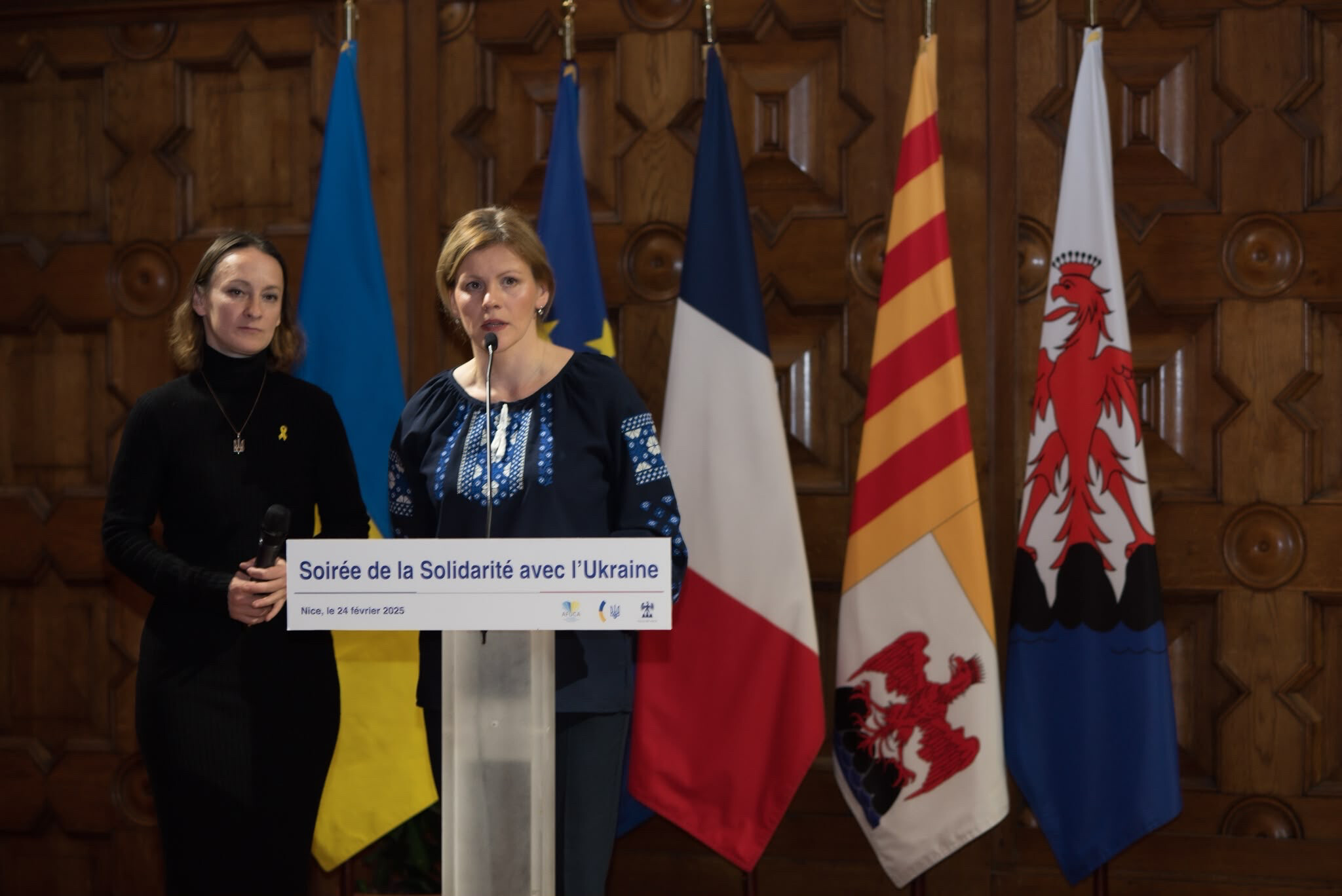
Today, AFUCA is the largest and oldest Ukrainian association on the French Riviera. And this year, in October, we will celebrate our 10th anniversary. It's symbolic for us. Since 2022, many other wonderful associations have been created in the region – mostly in Nice, but also in Cannes, Menton, and Tourrettes-sur-Loup. And that's a very good thing. The more of us there are, the stronger our voice, the more visible and essential our Ukrainian presence becomes. We're not in competition; we're complementary. But we must remember the context of February 2022. When the large-scale war began in Nice, we were the only ones. The only ones to exist as an established Ukrainian organization. And what saved us was that we already had a team. Not very large, but very close-knit. People who had known each other for years, who were used to working together. We didn't need to organize ourselves; we were already operational. Very quickly, within the first few days, we were able to sit at the same table as the Nice Côte d'Azur Metropolitan Area and the Alpes-Maritimes Prefecture. And together, in just a few days, we set up a reception and support system for the hundreds of displaced Ukrainians arriving. Housing, paperwork, schooling for children, psychological support, humanitarian aid… From a small cultural association, we became a crisis unit overnight.
You are now the Honorary Consul of Ukraine in Nice. Is it easy to become a diplomat? How did you come to hold this position?
Honorary Consul is a voluntary position, serving one's community. At a certain point, with the arrival of many Ukrainians in our region after 2022, we understood that it would be essential for the community to have official representation here on the French Riviera. Being present without official status had its limitations. After consultations with the Embassy of Ukraine in Paris, we decided to submit my application, along with recommendations. It was accepted. Then, I had to go through several interviews, demonstrate my motivation, experience, and local ties, and finally be appointed. I can't say that my daily work has radically changed since then—I was already very involved with the Ukrainian community. But I am called upon much more often, and in a more formal way. It's an honor, but it's also a great responsibility. And often, there isn't enough time to address all the challenges.
In concrete terms, what does the work of an honorary consul of Ukraine entail? What are your duties and the limits of your role?
This is a voluntary, field-based role with three main missions: to assist Ukrainians in my constituency in emergencies—accidents, hospitalizations, arrests—to report the local situation to the Ukrainian Embassy in Paris, and to organize events to promote Ukraine's image and economic ties with our region. It's also important to understand the limitations: I cannot issue passports, visas, or other official documents. For those, you must contact the Embassy in Paris or the Consulate in Lyon.
Ultimately, your phone must ring often… Is it still possible to separate your consular duties from your personal life?
It's quite difficult, to be honest. I never really turn my phone off so I can be reached in case of an emergency. But fortunately, I have a solid team around me who help and support me when I can't react instantly.
On June 29th, Ukrainian businessman Vadim Ermolaev and members of his family were victims of a very serious attack in Monaco. The case garnered international attention. Did such a violent event, occurring so close to the French Riviera, cause particular concern within the Ukrainian community?
This is a terrible event. I would first like to express my deepest condolences to the three victims of this attack during this difficult time. Naturally, an act of such violence, so close to home, has caused considerable distress and concern within the community. I know that the investigation is ongoing. I hope that the Monegasque authorities, in collaboration with the Ukrainian authorities, will shed full light on this matter and identify the true perpetrators. This is essential to prevent such attacks from recurring and to allay these anxieties.
Has the war changed the way the French view Ukrainians and Ukraine?
If there's one positive change the war has brought, it's this: the French and Europe have finally discovered Ukraine as a country. A country in its own right. We no longer hear phrases like, "Ukraine and Russia are the same thing." That's over. On the one hand, we've received tremendous support, and I see that the world continues to admire the courage and resilience of the Ukrainian people. On the other hand, there's also a sense of weariness in French society, which has its own problems to deal with and no longer wants to hear about the war in Ukraine. And unfortunately, this weariness opens the door to a lot of manipulation and propaganda.
After more than four years of large-scale war, don't you also sense a certain weariness in France and more broadly in Europe with regard to the war in Ukraine?
What is your view today of President Volodymyr Zelensky and his role since the beginning of the war?
It's always possible to criticize a country's president; that's normal in a democracy. And his role is so difficult that it's impossible to please everyone. But as long as the war continues, we must remain united behind him. He represents our country, he was democratically elected, and it's his responsibility to defend it.
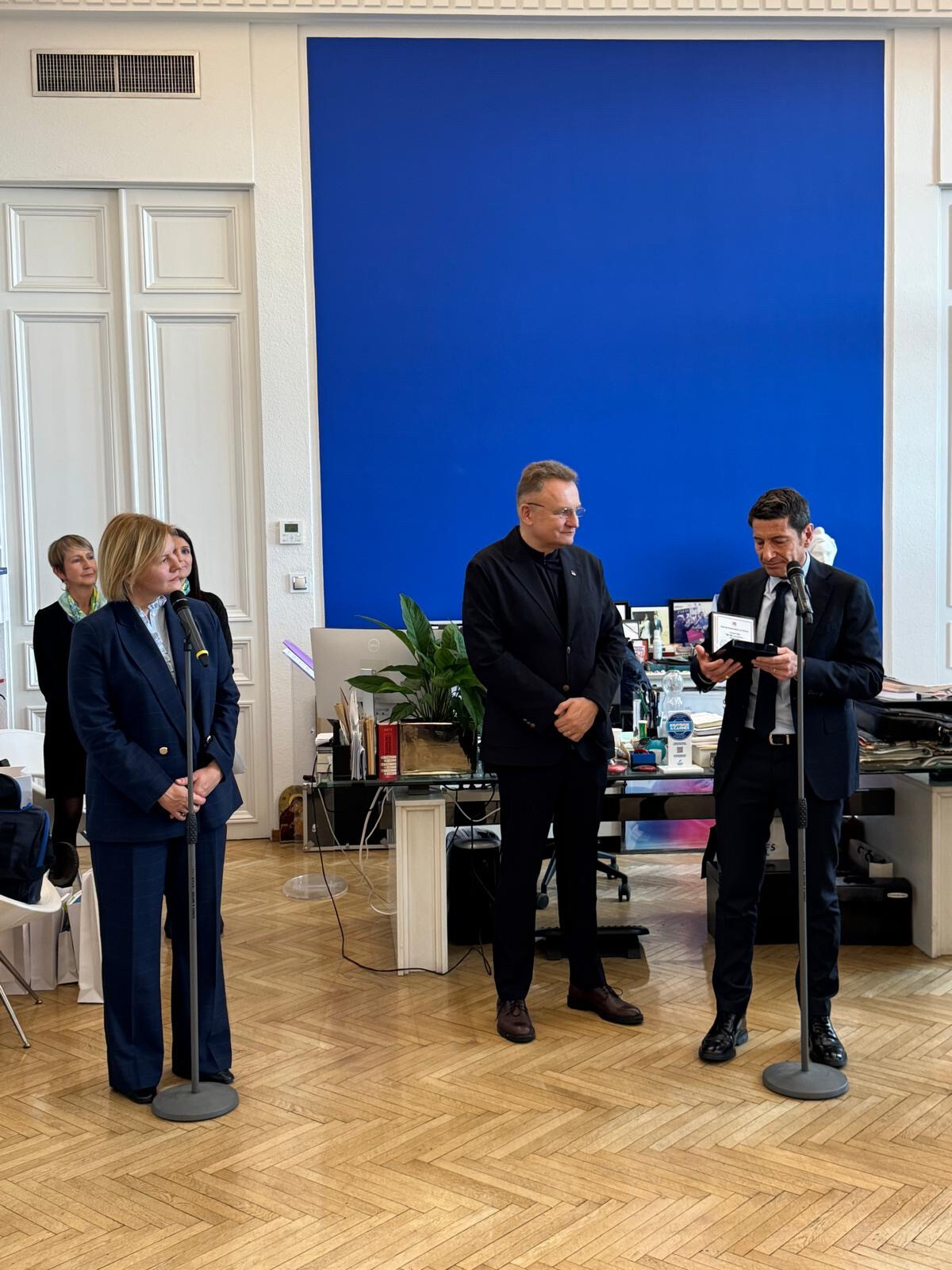
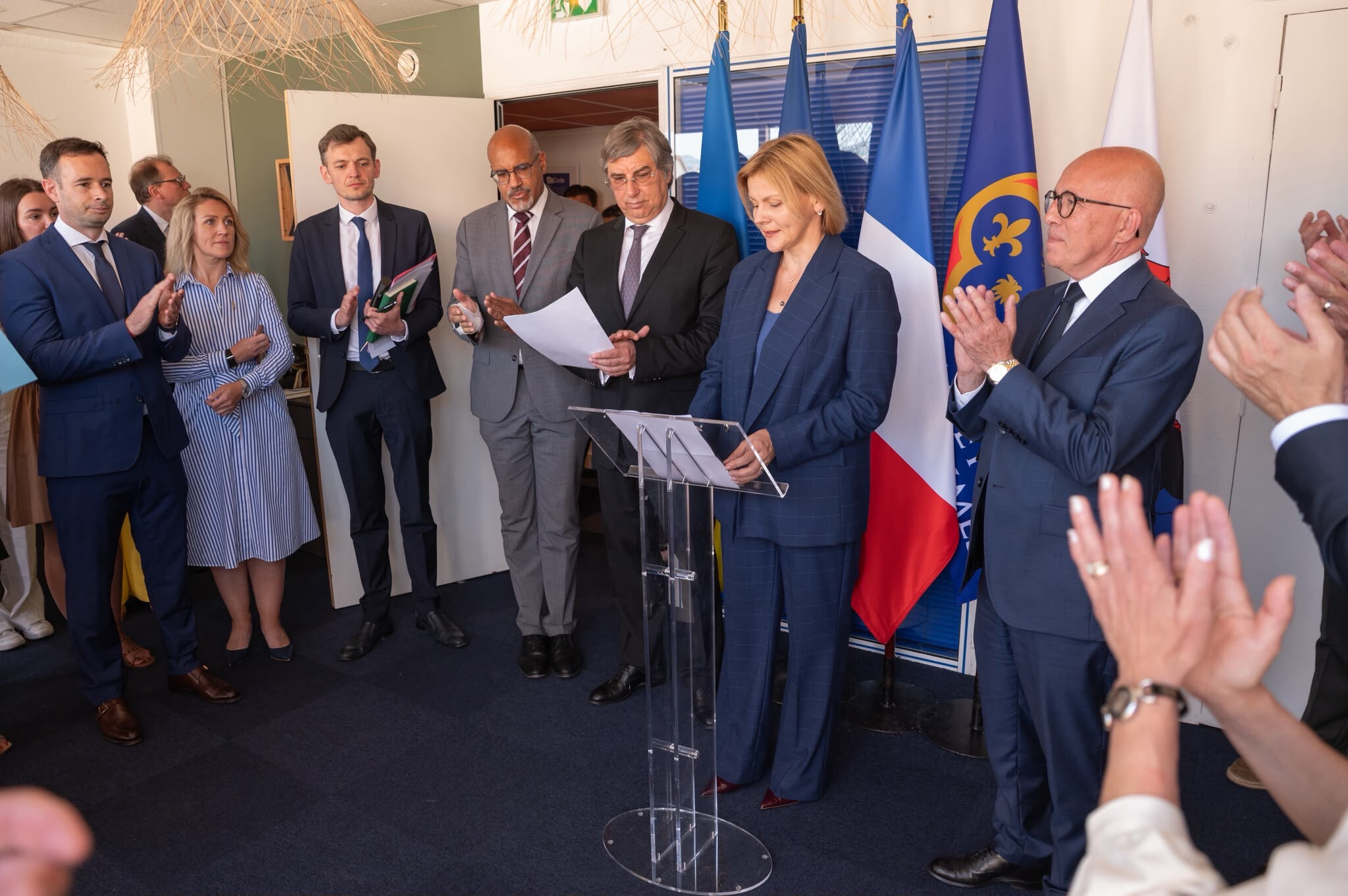
You recently met with the new mayor of Nice, Éric Ciotti. How did the meeting go? Is the City of Nice providing you with any concrete assistance in your endeavors, both for AFUCA and for the honorary consulate?
Yes, we had the honor of meeting Mayor Éric Ciotti during Ambassador Vadym Omelchenko's visit to Nice. During this meeting, support for Ukraine and the Ukrainian community was clearly reaffirmed. We discussed several cooperation projects between Nice and Ukraine. We are currently working on these projects, and I hope that with the new municipal team, we can bring these ideas to fruition, both for AFUCA (Association Française des Universitaires de Nice et d'Aménagement de la Côte d'Azur) and for the honorary consulate, as well as for our entire community.
What projects do you wish to develop today with the City of Nice and, more broadly, with the institutions of the French Riviera?
We are working on two main areas. First, a cooperation project between the Nice Côte d'Azur Metropolitan Area and an important strategic region in Ukraine. This is a genuine partnership project for the future. And second, we dream of opening a Ukrainian center in Nice. A unique place that could bring together all our initiatives: AFUCA's cultural and educational projects, economic cooperation, and the honorary consulate. A true hub for exchange between Nice and Ukraine.
The French Riviera is associated with sunshine, luxury, yachts, Monaco, and a certain art of living. Does it sometimes seem strange to talk about war on a daily basis in this environment?
Ukraine is also a very beautiful country, with magnificent landscapes and a rich heritage. And this country would also like to live in the sunshine and simply enjoy life. But today this country is under attack, and we cannot remain idle, even under the sun of the French Riviera. Ultimately, it's not just Ukraine's war; it's all our war. And yes, sometimes it's difficult to have to wake up the people around us to remind them of this reality. So we adapt: we invent other ways to talk about Ukraine—by organizing film screenings, concerts, exhibitions, and opportunities for discussion. To show that this country is much more than just an image of war.
Are you still able to have a personal life with all these responsibilities and truly "disconnect"?
To be honest, this doesn't happen to me often. But I'm lucky to have a family that understands and supports me. Let's just say my personal life has adapted to this pace. And besides, when you know how people live in Ukraine today, you can't complain. Continuing to work without giving up is the least I can do for Ukraine.
After all these years in France, do you feel more French or Ukrainian?
It's hard to say. In my everyday life, I'm French; that's my daily reality. But my soul, the way I experience the world, all of that remains deeply Ukrainian. And I've come to understand that we don't have to choose between the two. Leaving a country doesn't mean denying our roots. They give us strength. We can live in harmony without having to choose, provided we don't forget where we come from and that we maintain respect and gratitude for our adopted country.
What do you miss most about Ukraine?
Its beauty. Its vast landscapes. And of course, the places where I spent my childhood, those that remain etched in my memory. I also miss its climate, with its true seasons. And also, the open-mindedness of Ukrainians, this desire to live freely that is so inspiring.
Conversely, what do you like most about life on the French Riviera?
My children were born on the French Riviera. So it's here that I'm writing a new chapter of my life, a chapter filled with all our memories. And I will cherish this chapter forever. I also deeply love the region's rich culture. The light, the gentle pace of life, but also the incredible blend of history, art, and cultures that intersect here. You never tire of it.
Do you imagine one day returning to live permanently in Ukraine, or do you now consider France your second home?
I've learned that you should never say never. Today, my life is in France. But who knows what the future holds? I'm optimistic; I believe in Ukraine's victory. It's a very rich country, and there will be so much to do to rebuild it. So, we'll see.
The reconstruction of Ukraine will be one of the major challenges of the coming years. What role can Ukrainians living abroad, particularly in France, play?
Every Ukrainian abroad must remember their responsibility: to represent their country. We must all, in a way, be ambassadors. We must speak out to tell the truth, to combat propaganda. And after the war, the ties that have already been forged between France and Ukraine must be strengthened—economic ties, but also cultural and human ties. This is where the Ukrainian community in France will have a crucial role to play.
What do you think Ukraine will look like in ten years?
I am optimistic, so I want to believe in a bright future for Ukraine. Realistically, everything will depend on the duration of this war. Not on its outcome, because for me, Ukraine has already won. It won on the third day, in February 2022. When the whole world held its breath, expecting to see the country fall as the enemy had predicted. And when Ukraine stood up to this army that everyone thought was so powerful. When our forces managed to stop and repel it, and when our civilians volunteered to fight. That was the precise moment Ukraine won. Now, it's only a matter of time. Every dictatorship comes to an end, and the Russian empire will collapse. We must hold on and resist until then. And for that, we need support. If we succeed, then in ten years Ukraine will be a magnificent, rebuilt country, with its rich lands, and more welcoming than ever.
If you had a message to send directly to the French people who read us today, what would it be?
If we want to live in a free and democratic world, then continue to support Ukraine in its fight against barbarity.
Finally, on this August 24, 2026, if you had to define today's Ukraine in one word, which would you choose?
Resilience.