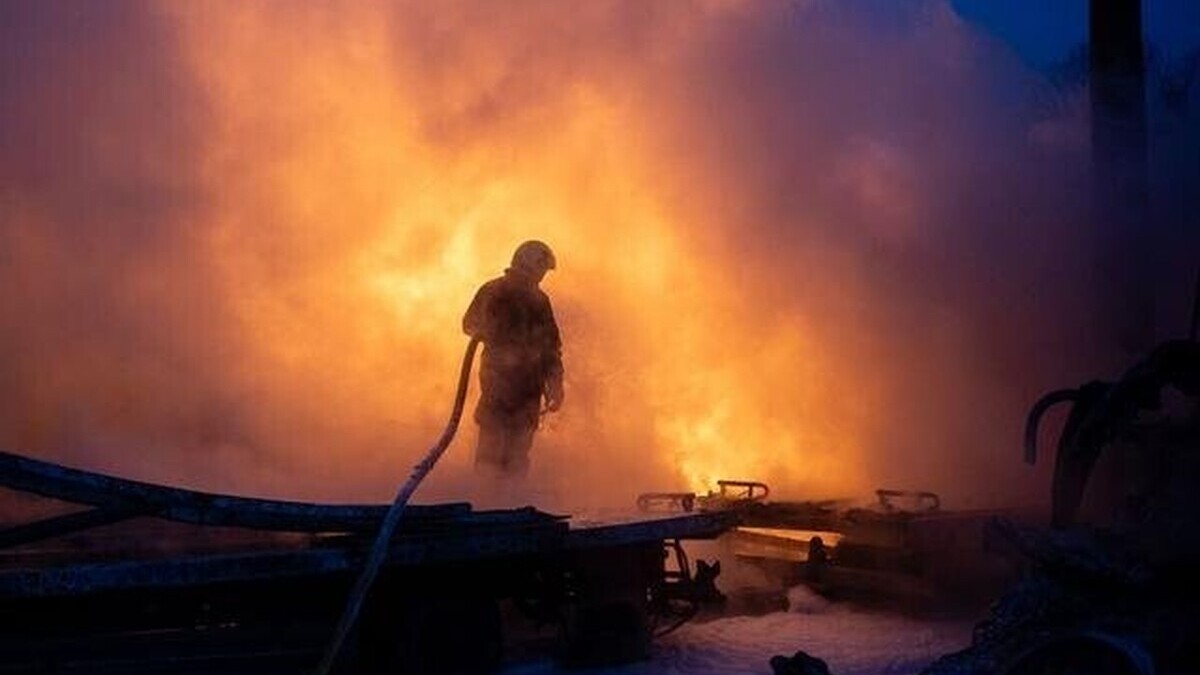
The confrontation between Iran and the United States intensified overnight from Tuesday to Wednesday. The Revolutionary Guards claim to have attacked ten ships in the Strait of Hormuz region, including two American vessels and eight tankers. Tehran also launched about twenty missiles toward a base used by US forces in Jordan. This new retaliation follows the destruction on Tuesday of five Iranian tankers by the US military.
This escalation comes three days after the destruction of the first three Iranian tankers by Washington and Tehran’s announcement of reprisals. After several weeks of relative calm, the clashes again simultaneously affect naval forces, military installations, and oil infrastructure.
Two US ships and eight tankers attacked according to the Revolutionary Guards
The Revolutionary Guards announced on Wednesday that they targeted ten ships, including two American vessels and eight tankers, which they said were attempting to cross an area of the Strait of Hormuz declared off-limits by Iran. These are indeed ten ships in total, with the two American vessels and eight tankers constituting all the targets claimed by Tehran.
Iran claims these vessels were trying to enter an area described as “prohibited and dangerous”. Iranian authorities have not immediately provided a precise assessment of the damage caused to each ship. The United States had also not confirmed by Wednesday morning that two of their vessels had indeed been hit.
The significance of this claim lies in the nature of the targets: Iranian forces say they directly attacked American vessels, while Washington and Tehran have been escalating strikes and attempted strikes at sea for several days. Already on Saturday, the United States destroyed three tankers linked to Iran after missile attacks on two US Navy ships.
20 missiles fired toward a US base in Jordan
Iran also claimed an attack on a base used by US forces near Al-Azraq, Jordan. The Revolutionary Guards say their ballistic missiles inflicted significant damage on military installations, notably on infrastructure hosting American combat aircraft.
Jordan, however, provides a very different assessment. According to Amman, 20 Iranian missiles were fired toward Jordanian territory, of which eighteen were intercepted by air defense. The other two fell in uninhabited areas. No deaths or injuries were reported. A US official also indicated that all American military personnel present at the base were accounted for safe and sound and that the attack did not achieve its objectives.
This strike follows several Iranian attacks on installations used by Washington in the region. Last week, Tehran notably claimed strikes against US bases in Kuwait and the United Arab Emirates.
The United States destroyed 5 more Iranian tankers on Tuesday
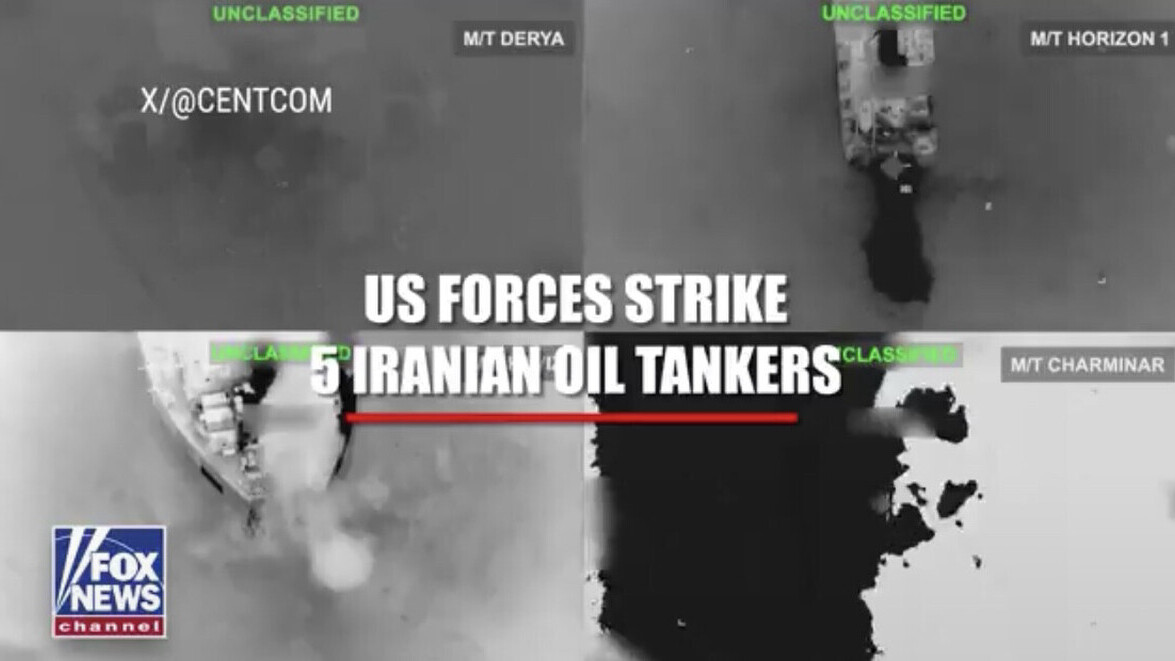
The Iranian retaliation directly follows a US operation on Tuesday against 5 Iranian tankers. The US Central Command says it destroyed these vessels after the Revolutionary Guards twice attempted, over the previous two days, to strike a US Navy ship with ballistic missiles. No American military personnel were injured during these attempts.
Washington claims the destroyed tankers belonged to a network financing the Revolutionary Guards and their regional allies. These five vessels add to the three Iranian tankers struck on Saturday, notably near Kharg Island, the country’s main oil export terminal. Explosions had also been reported around this strategic oil hub a few hours before the confirmation of the first US strikes.
US Secretary of State Marco Rubio warned that Washington would continue responding to Iranian attempts against its vessels: “Every time they do or try to do so, they will lose tankers.”
The Strait of Hormuz at the heart of the confrontation
The newly claimed attack on the two US ships occurs in a particularly sensitive area. The Strait of Hormuz is one of the world’s most important maritime passages for oil and gas exports. Iranian attacks have significantly reduced commercial traffic in the sector in recent days. On Tuesday, only six ships carrying raw materials crossed the strait, compared to an average of twelve per day over the previous ten days.
Securing this passage has become an international issue. South Korea is notably studying several options to contribute to securing the Strait of Hormuz, on which a significant part of its energy supplies depend.
Washington, for its part, seeks to maintain passage for ships transporting oil to international markets while preventing Iran from exporting its own production. Tehran, on the contrary, tries to impose increasing restrictions on vessels crossing the area. This naval confrontation is now one of the main fronts of the war between the two countries for six months.
Oil dangerously approaches $100
This new night of strikes immediately impacted the markets. Brent continued Wednesday its fourth consecutive session of gains and approached the threshold of $100 per barrel, reaching about $99.5 in early Asian trading. US WTI crude traded above $94.
Tensions are heightened by the opening of another front in Saudi Arabia. Yemen’s Houthis, allies of Iran, struck several cities and Saudi oil facilities on Tuesday. 73 people were injured and fires were reported at several sites. Drones and missiles notably targeted an airbase at Khamis Mushait as well as facilities linked to Saudi Aramco in Abha, Najran, and Jazan.
In a few days, the clashes have directly affected Iranian tankers, US ships, a base used by Washington in Jordan, and Saudi energy installations. The Iranian claim regarding the attack on two American vessels now constitutes one of the most sensitive developments of this new escalation, while the exact damage suffered by the targeted ships remains to be determined.