Formula 1 is preparing its return to the African continent, which it left in 1993. Rwanda and the sport’s leaders have reportedly reached an agreement to organize a Grand Prix near Kigali, the country’s capital. A first edition is planned from 2030, although no exact date has yet been set. The project, supported since 2024 by Rwandan President Paul Kagame, could allow Africa to regain a place in the world championship after more than three decades of absence.
The agreement still needs to be formalized, and several steps must be completed before a race can be organized. The final choice of the circuit, its financing, approval, and calendar inclusion are the main issues to be resolved.
A new circuit to be built near Kigali
To host the fastest single-seaters in the world, Rwanda plans to build a permanent circuit in the Bugesera region, close to Kigali and the new international airport. The country currently has no approved infrastructure to host a Formula 1 Grand Prix.
The proposed layout has been entrusted to WurzDesign, a company founded by former Austrian driver Alexander Wurz. The circuit must meet the safety and homologation requirements of the Fédération Internationale de l’Automobile, notably obtaining Grade 1 certification, essential to host a world championship race.
The project represents a considerable investment. Beyond the track, organizers will need to plan for pits, technical facilities, grandstands, road access, and infrastructure necessary to accommodate teams and spectators. No final budget has been officially announced.
The last African Grand Prix dates back to 1993, with a victory by Alain Prost
The last Formula 1 race held on the African continent was on March 14, 1993. On that day, Frenchman Alain Prost won the South African Grand Prix at the Kyalami circuit, driving his Williams-Renault. He finished ahead of Ayrton Senna, second in a McLaren-Ford, and Mark Blundell, third in a Ligier-Renault.
South Africa hosted 23 world championship Grands Prix between 1962 and 1993, first at the East London circuit, then at Kyalami. Since that last edition, no African country has succeeded in securing a new spot on the calendar.
If the Rwanda Grand Prix takes place in 2030, this absence will have lasted 37 years. An organization after that date would further extend this period without Formula 1 on the continent.
Rwanda takes the lead over South Africa
Rwanda was not the only candidate aiming to bring Formula 1 back to Africa. South Africa has been working for several years on the return of the Kyalami Grand Prix near Johannesburg, while another project was studied in the Cape region.
The Rwandan bid now seems to have taken a decisive lead. President Paul Kagame officially announced his country’s ambitions in December 2024 during the FIA general assemblies held in Kigali. Since then, discussions with Formula 1 officials have continued.
South African Sports Minister Gayton McKenzie has nevertheless assured that his country remains determined to host a race. The possible awarding of a Grand Prix to Rwanda would not necessarily prevent South Africa from also securing a calendar spot.
Lewis Hamilton and Max Verstappen support F1’s return to Africa
The return of Formula 1 to the African continent has been advocated for several years by Lewis Hamilton. The seven-time British world champion, whose career at Ferrari has experienced difficult periods, has regularly criticized Africa’s absence from the calendar and supported organizing a Grand Prix on the continent.
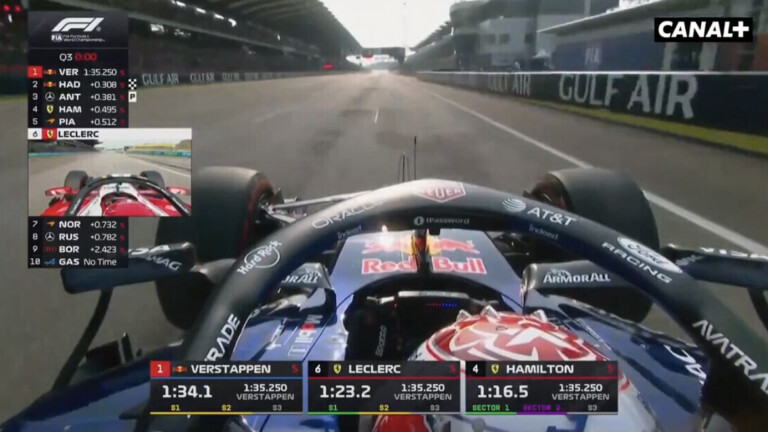
Max Verstappen has also welcomed this prospect. The four-time world champion, recently victorious in Sepang ahead of Kimi Antonelli and Lewis Hamilton, has already visited Rwanda and expressed his wish to see the project succeed. George Russell has also supported the idea of Formula 1’s return to Africa.
The sport must, however, contend with an already very busy calendar. Adding a new race will require finding a place among existing Grands Prix, considering contracts with various circuits and logistical constraints imposed on teams.
A project that also raises questions about its cost
Rwanda has been increasing investments in international sport for several years. The country has notably become known through its « Visit Rwanda » advertising partnerships with several European clubs, including Paris Saint-Germain, Arsenal, and Atlético de Madrid.
This international promotion policy also attracts criticism. The cost of sports partnerships and their economic impact on the population are regularly debated, while the country continues to face significant economic challenges. Rwandan authorities defend a strategy aimed at developing tourism, attracting investors, and strengthening the territory’s appeal.
The Grand Prix project could also fuel diplomatic controversies related to Rwanda’s role in eastern Democratic Republic of Congo. Kigali is accused by Congolese authorities and several international partners of supporting the M23 rebel movement, which the Rwandan government denies.
A first race in 2030, or later
Organizing a Grand Prix would be one of the most ambitious sports projects ever undertaken by Rwanda. The country will now need to obtain the necessary authorizations, secure funding, build the circuit, and definitively convince Formula 1 authorities to include it in the world championship.
The year 2030 is currently considered more as a planned horizon than a fixed deadline. A first edition could take place later in the decade, depending on the progress of works and organizers’ decisions.
If all these steps succeed, Formula 1 engines will roar again on the African continent, more than 37 years after Alain Prost’s last victory at Kyalami.