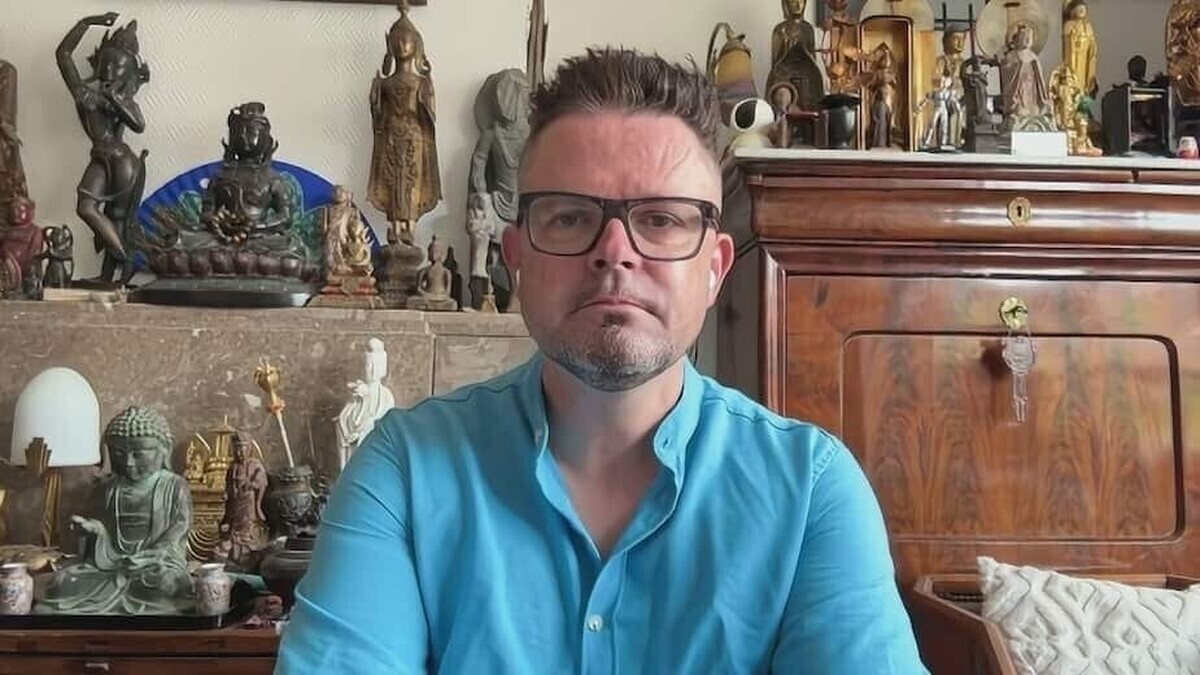
Exactly three years after the attacks of October 7, 2023, Sébastien Boussois delivers in a column published this Wednesday morning in the JDD a particularly grim analysis of the situation in the Middle East. Doctor of political science, specialist in the Arab world and international relations, the director of the European Geopolitical Institute reflects on the Israeli trauma, Benjamin Netanyahu’s strategy, and three years of war which, according to him, have still not allowed for a durable political outcome.
Sébastien Boussois begins by revisiting the foundational trauma of October 7. The attacks carried out by Hamas and other Palestinian armed groups caused about 1,200 deaths in Israel and led to the abduction of 251 people. The researcher describes an event that deeply unsettled an Israeli society built around the promise of security offered to Jews after the persecutions of the 20th century. He also emphasizes the profile of many victims from kibbutzim and the Nova festival, who, according to him, came from a rather pacifist segment of Israeli society.
Boussois also criticizes Netanyahu’s strategy
But three years after the massacres, the analysis is not limited to Hamas’s responsibility. Sébastien Boussois offers a particularly critical view of the policy pursued by Benjamin Netanyahu before October 7. He notably reproaches him for having sought for years to contain rather than eliminate Hamas, in order to weaken the Palestinian Authority and delay the prospect of a Palestinian state. Added to this, according to him, is the expansion of settlements in the West Bank and a security strategy that did not allow anticipating the attack.
The researcher also considers that the war launched in Gaza in response to October 7 did not achieve all the announced objectives. Israel eliminated many Hamas leaders, including Yahya Sinwar, and demonstrated its military superiority against several regional adversaries. But Boussois points out that Hamas and Israel’s other enemies have not disappeared. Meanwhile, Gaza has been deeply devastated and the Palestinian civilian populations have paid a considerable price. In his view, Israeli military power has therefore not resulted in a political solution capable of sustainably guaranteeing the country’s security.
« Israel Still Awaits the One Who Will Finally Prevent the Next »
A few weeks before the Israeli elections on October 27, Sébastien Boussois nevertheless believes that Benjamin Netanyahu retains serious assets. Despite the wear of the war and the criticisms targeting his political responsibility, the Prime Minister could still appear to part of the Israeli population as the one who embodies the country’s power and ability to defend itself. The researcher also highlights the difficulties of his opponents in presenting a sufficiently strong alternative.
His final assessment is particularly pessimistic: three years after October 7, Israelis continue to mourn their dead, Gaza is devastated, Israel’s enemies remain active, and no political solution to the Israeli-Palestinian conflict seems truly close. Hatred between the two societies has reached, according to him, a level that makes any prospect of reconciliation extremely difficult.
The conclusion of Sébastien Boussois sums up his entire column. Benjamin Netanyahu can still try to convince Israelis that he is the man capable of winning their wars. But, writes the researcher, « Israel still awaits the one who will above all finally prevent the next one ». Three years after the trauma of October 7, it is perhaps here, more than in the mere military balance of power, that the essential question for the region’s future now lies.