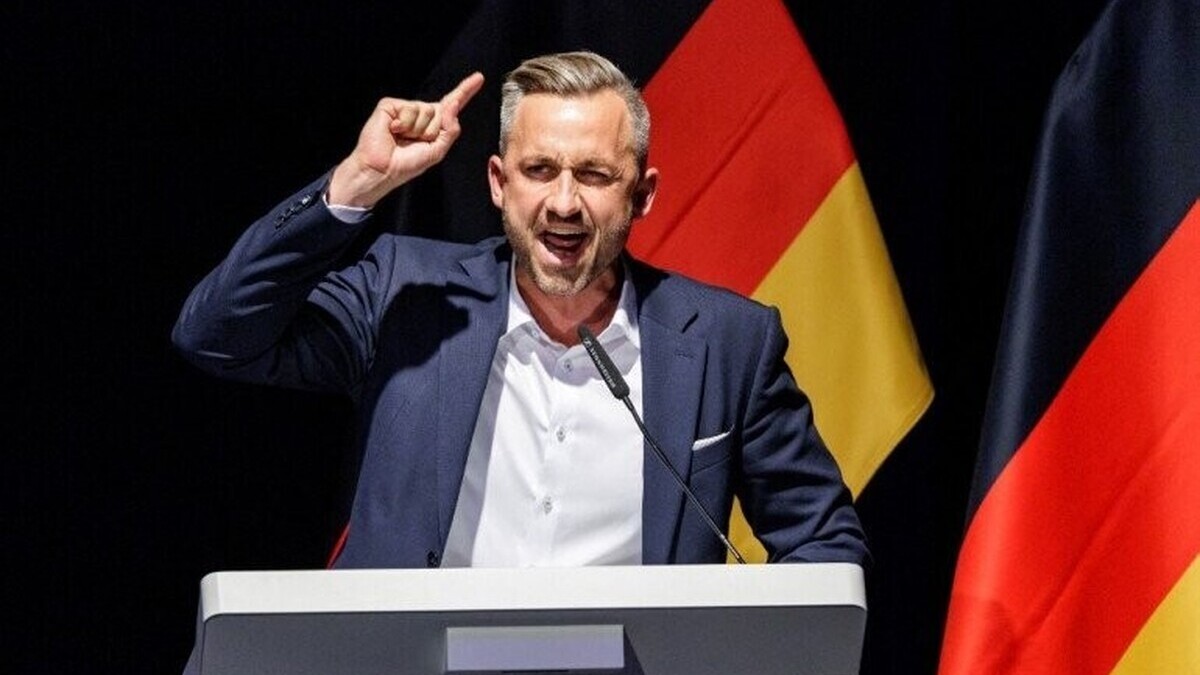
The far-right party achieved its best result in a German state during the regional elections of September 6, 2026, leaving the CDU more than twenty points behind.
This is an unprecedented result in post-war German electoral history. According to initial estimates from the public broadcaster ARD, the Alternative for Germany (AfD) garnered 44,5% of the vote in Saxony-Anhalt, crushing all its opponents in Sunday's regional election.
The CDU of outgoing Minister-President Sven Schulze, which had ruled out any cooperation with the AfD, collapsed to 18,5%, more than 26 points behind the winner. The far-right candidate, Ulrich Siegmund, declared on public television that his party had "made history."
The question of governance remains open. To obtain an absolute majority in the Magdeburg Landtag, the AfD will have to ensure that a minimum number of parties cross the 5% threshold: each additional party that enters the regional parliament mechanically reduces the chances of an absolute majority for the party.
However, according to ARD projections, several parties would reach this threshold. The radical left party, Die Linke, would obtain 9,5%, ahead of the Greens at 9% and the SPD at 8%. The left-wing populist movement BSW, credited with 5%, is still fighting for its seat in the regional parliament.
This election in the former GDR confirms the continued progress of the AfD in the Länder of eastern Germany , where the party had already achieved high scores in previous regional elections.