Édouard Philippe seems to have significantly changed his stance on referendums. A guest on franceinfo this Tuesday, the former Prime Minister , now officially running for president in 2027, presented himself as perfectly comfortable with the idea of directly consulting the French people. Even more: he wants to make referendums "more commonplace." This position contrasts sharply with that of the Prime Minister in 2019, when the citizens' initiative referendum demanded by the Yellow Vests movement "made his blood boil."
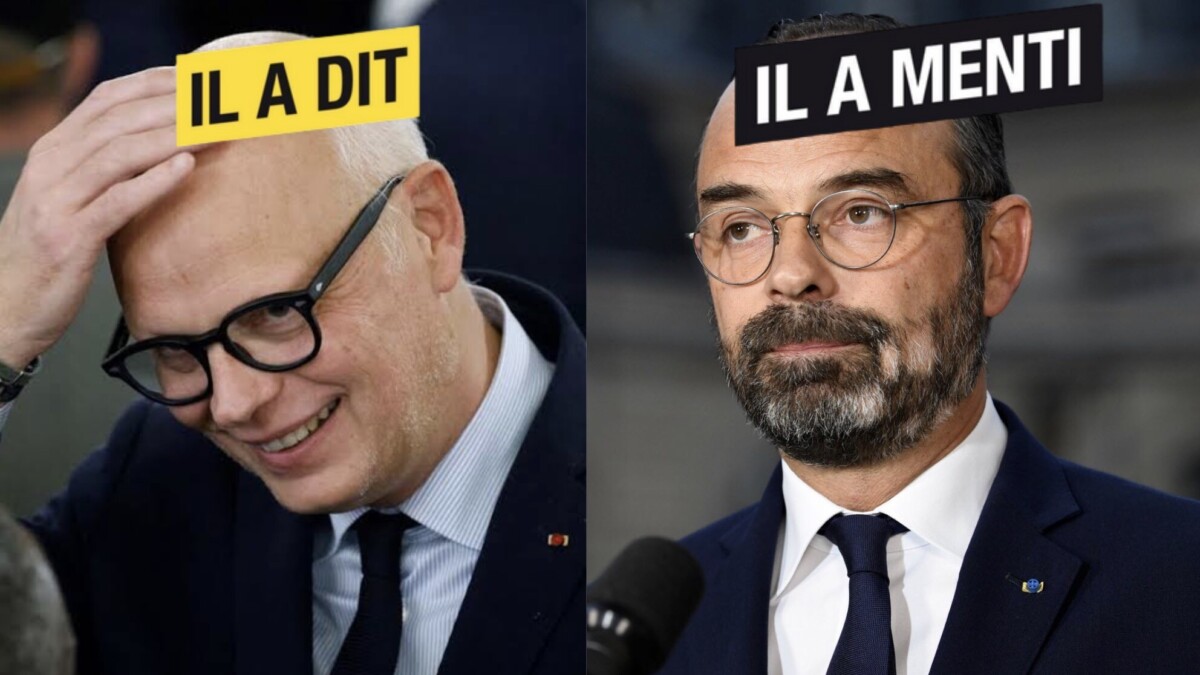
HE SAID…
When asked about Bruno Retailleau 's proposals , which notably include revising the Constitution to broaden the scope of referendums to include immigration, Édouard Philippe was keen to demonstrate his commitment to this democratic tool: "I have no problem with the idea of referendums. And I also think that we should make the use of referendums more commonplace."
The former Prime Minister nevertheless clarifies that he wants to respect the framework established by Article 11 of the Constitution and refuses, unlike Bruno Retailleau , to circumvent the Constitutional Council . But on principle, candidate Philippe now wants to be crystal clear: more referendums? "That suits me just fine," he asserts.
A speech intended to show that he has no fear of giving the French people a direct voice.
HE LIED!
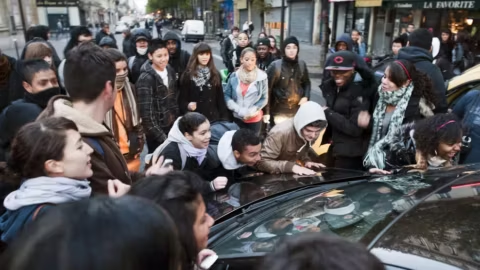
Let's go back seven years. On January 25, 2019, at the height of the Yellow Vest crisis, Édouard Philippe participated in the Great National Debate in Sartrouville. And when the question of a citizens' initiative referendum arose, a topic then being insistently demanded by part of the movement, the Prime Minister appeared far less enthusiastic:
"If I had to put it in one sentence, I'd say that the RIC (Citizens' Initiative Referendum) makes my skin crawl."
And Édouard Philippe didn't stop there. He warned against a "terrible mechanism" in which the French could regularly challenge decisions already passed. In his view, the shared initiative referendum, much more regulated and difficult to trigger, was preferable because it was more respectful of representative democracy.
Admittedly, Édouard Philippe wasn't opposed to all forms of referendums in 2019. A few weeks earlier, he even acknowledged that a referendum could be "a good tool in a democracy," provided it wasn't used on just any subject. But his hostility to the Citizens' Initiative Referendum (RIC) was particularly clear at the time.
Seven years later, with a presidential election on the horizon, the vocabulary has therefore radically changed. What "made his hair stand on end" yesterday has become a tool whose use should be made "more commonplace" today.
At Matignon , facing the Yellow Vest movement, Édouard Philippe feared a direct democracy that could challenge the government's decisions. As a presidential candidate, facing a French public increasingly demanding to be consulted, he suddenly rediscovered the virtues of the referendum.
As is often the case in politics, certain convictions become much more flexible as a presidential election approaches.