The Ukrainian Finance Minister has warned his European partners of a colossal deficit expected in 2027, combining uncovered civilian and military needs. He urges the European Union to take action on Russian funds frozen since 2022.
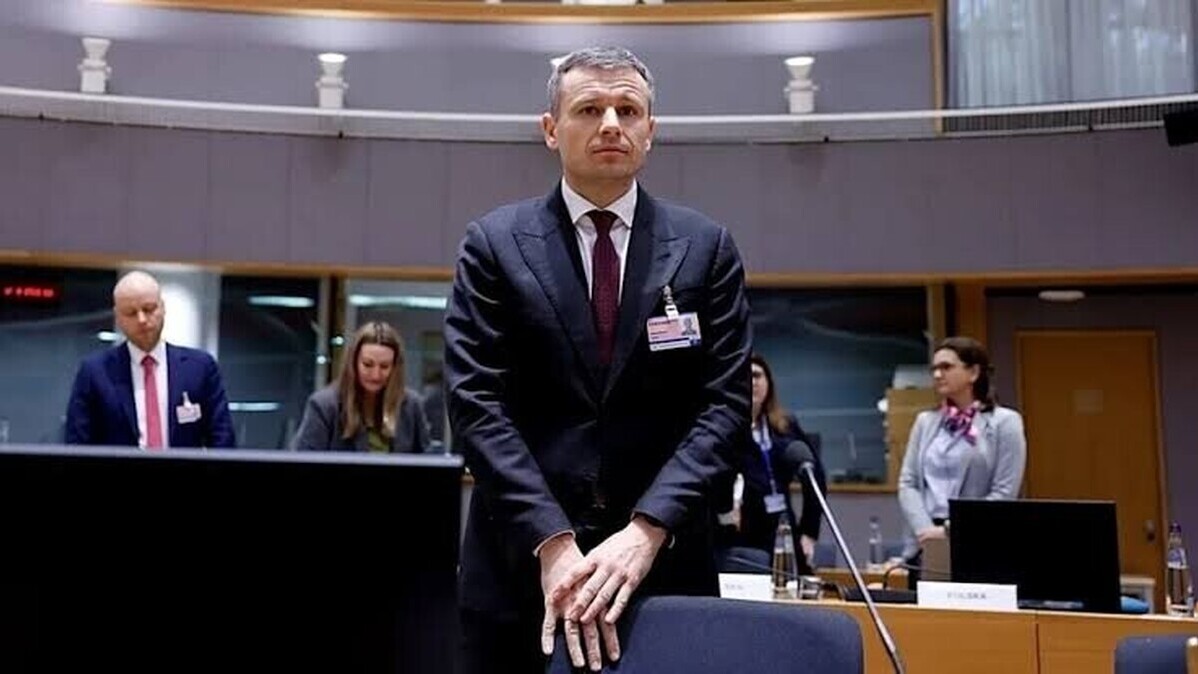
The figure is staggering: $78 billion. This is the amount of the financial and military deficit Ukraine will face in 2027 if its allies do not significantly increase their support. Sergii Marchenko, Ukrainian Finance Minister, presented this reality on Tuesday in Brussels during a meeting with representatives of international donors and financial institutions.
The calculation is stark in its simplicity: of the $52.6 billion in financial aid expected from donors, only $20 billion is currently guaranteed, leaving a shortfall of $32.6 billion. Added to this are approximately $45 billion in defense expenditures without allied coverage. The sum of the two creates this $78 billion gap, which Kiev cannot fill alone.
To address this, the Ukrainian minister has one solution in mind: the assets of the Russian Central Bank, frozen since the invasion in February 2022. The European Union holds €210 billion of these, nearly all kept at Euroclear, the central depository based in Brussels. Marchenko advocated for a centralized legal framework to mobilize these funds, which he presents as both a pragmatic and legitimate response. “We need our friends, our European political leaders, to have the courage to make strong decisions,” he said during a panel organized Monday by the European Policy Centre.
The Ukrainian budgetary pressure is worsened by intensified Russian strikes on civilian infrastructure. Electrical grids are regularly taken offline, factories destroyed, and tax collection is directly affected. Marchenko acknowledged an unprecedented deterioration: “This is the first time since 2022 that we observe underperformance of our fiscal and customs administrations.” Moscow now also targets Ukrainian data centers, seeking to weaken the country’s digital economy. The blockade in the Black Sea, which deprives Ukrainian farmers of their grain outlets, also weighs on revenues.
This debate over Russian assets is not new. Last December, a European Commission proposal to convert these funds into a zero-interest credit line for Ukraine failed at a tense summit, with Belgium rallying a majority against the project. In compensation, European leaders agreed on a €90 billion loan backed by common debt, split equally between 2026 and 2027. But the escalation of the conflict quickly made this amount insufficient in Kiev’s eyes. “We are very satisfied with the €90 billion. But it is not enough,” Marchenko summarized.
Several member states share this assessment. Sweden, the Netherlands, Spain, Poland, and the Baltic countries have called for “new options” to mobilize Russian assets. Belgium again firmly opposes this. Italy and France, whose positions are closely watched, remain reluctant to touch foreign sovereign funds, according to diplomatic sources.
The European Commission, keen to avoid another political failure, prefers to focus its efforts on disbursing the already approved €90 billion loan, whose payment is slowed by what is considered an insufficient pace of reforms in the Ukrainian parliament. Enlargement Commissioner Marta Kos was explicit at Tuesday’s donor conference: “Our message to our Ukrainian friends is clear: implement the agreed reforms so that we can continue to support you financially.” Brussels has been holding discussions with Kiev and the International Monetary Fund for a month to refine the assessment of the real deficit, as Ukrainian figures have not yet received official validation from the Commission.