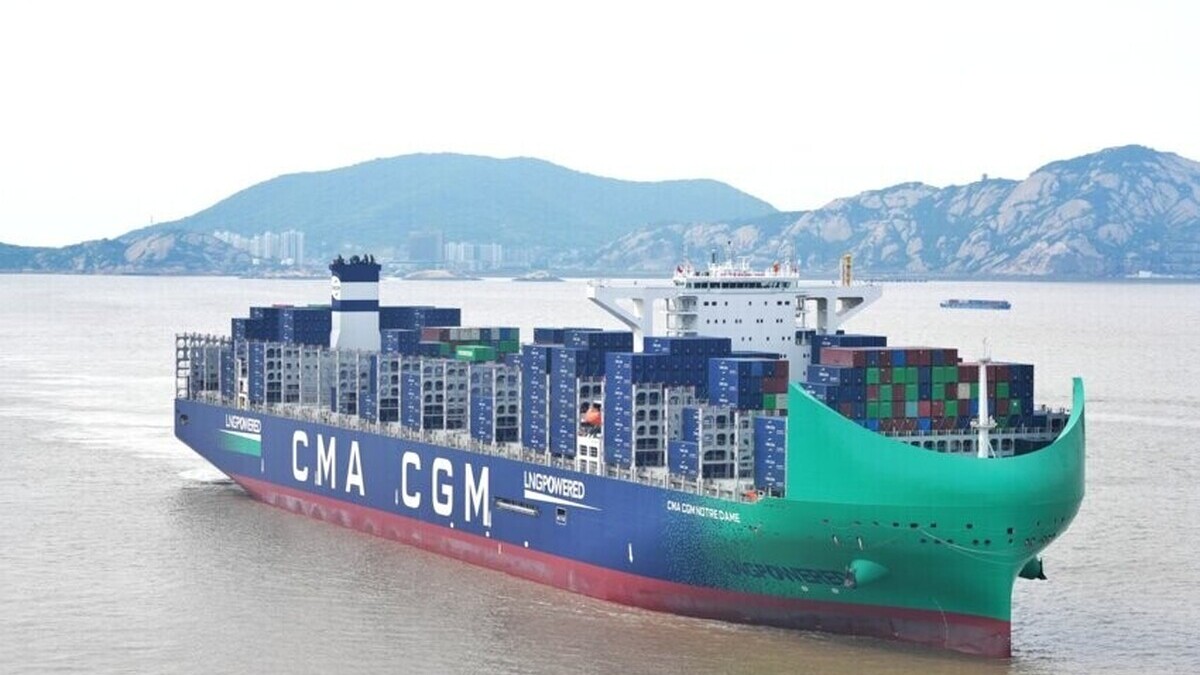
Two major French companies are joining forces to develop a new energy sector for maritime transport. CMA CGM and Engie announced on Tuesday, October 13, 2026, the signing of a framework agreement for the construction of a biomethane production unit in the industrial port area of Le Havre. This facility will supply renewable fuel to part of the French shipping company's fleet, which has been committed for several years to reducing its greenhouse gas emissions. Commissioning is planned for 2029, subject to the completion of the various industrial and regulatory milestones. The project is part of a broader strategy to diversify the fuels used by merchant ships.
The facility, to be developed by Engie, is expected to produce approximately 7,000 tons of biomethane per year, equivalent to 100 gigawatt-hours of energy. This renewable gas will be produced primarily from agricultural waste, livestock effluents, and biowaste. It can be used by CMA CGM vessels already running on liquefied natural gas, without requiring major modifications to their engines. According to estimates provided by the companies, the planned production would avoid approximately 23,000 tons of carbon dioxide emissions annually. Biomethane would also offer a reduction of at least 67% in greenhouse gas emissions over its entire life cycle compared to the reference fossil fuel.
Le Havre aims to become a strategic hub for alternative fuels
The choice of the port of Le Havre addresses several industrial and logistical objectives. This area is one of France's main port hubs and already hosts numerous energy-related activities. The construction of a biomethane production facility should bring fuel production closer to its users, while utilizing resources primarily from the agricultural sector. The project also includes the production of digestate, a residue from methanization that can be used as fertilizer. The companies thus intend to develop a business combining energy supply and the valorization of organic waste. Engie will, however, need to obtain the necessary permits before construction of the facility can begin.
This initiative illustrates the transformations facing international maritime transport. Shipowners are subject to increasing environmental requirements and are seeking to reduce their dependence on traditional petroleum fuels. Several solutions are currently being studied, including biomethane, synthetic fuels, methanol, and ammonia. However, each presents constraints in terms of production, cost, availability, and infrastructure. For CMA CGM, the partnership with Engie represents a way to secure part of its future supply of alternative fuels. For the energy company, it represents an opportunity to develop a still-emerging industrial market. The Le Havre project thus demonstrates the growing convergence between the transport and energy sectors in the search for solutions to reduce emissions from maritime trade.