

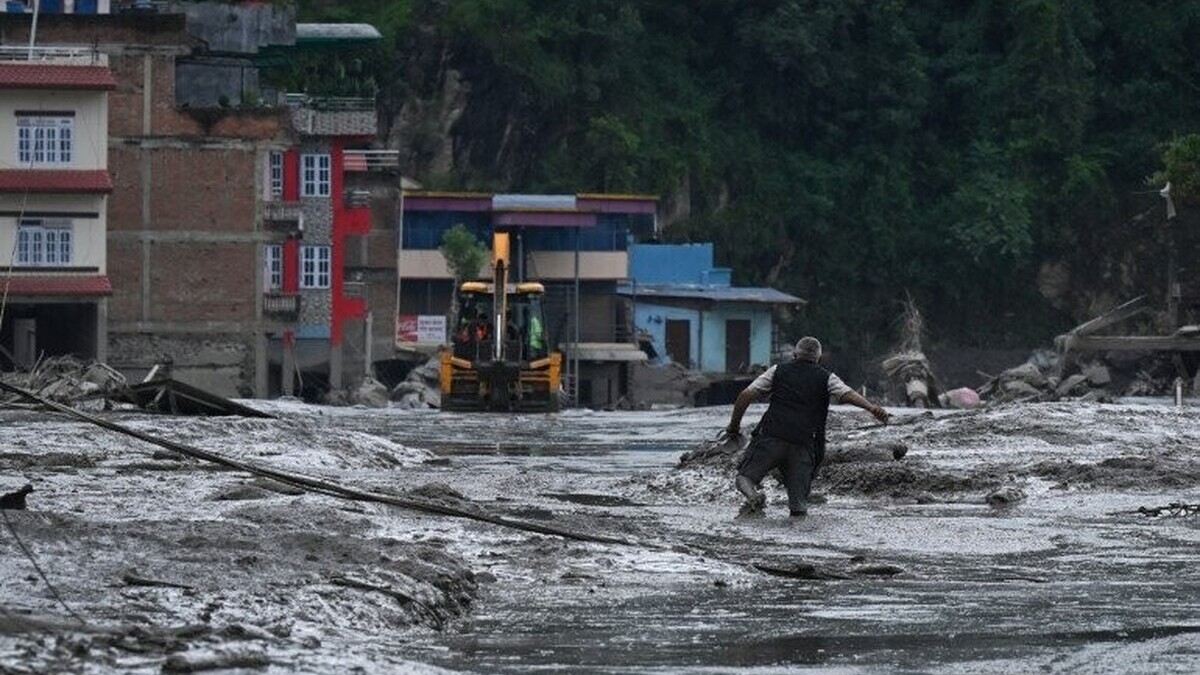
A glacial collapse on Wednesday on the Nepal-Betina border caused devastating floods, killing at least 389 people on the Nepalese side and leaving more than a thousand missing between Nepal and China.
Rescuers continued their operations Friday on the border between Nepal and Tibet, the day after a disaster that ravaged villages, washed away roads, and destroyed entire buildings under a wave of mud and rocks. Nepalese police confirmed at least 389 deaths, including 64 found in the Chitwan district and 26 in Nawalparasi East. Nepal's National Disaster Risk Management Authority reported 910 missing as of Thursday evening, including 517 foreign nationals, 44 military personnel, and 28 police officers.
On the Chinese side, state broadcaster CCTV announced that 558 people were missing in Gyirong County, Tibet, including 260 foreigners. The official death toll in China stood at three.
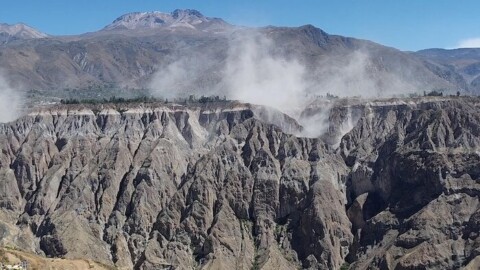
Contrary to initial reports, the disaster was not caused by an earthquake. The U.S. Geological Survey (USGS) clarified that the catastrophe resulted from a "glacial collapse": the disintegration of a glacier or part of a glacier. The impact of the mass of ice at the bottom of the valley generated vibrations equivalent to a magnitude of 5,2, which initially led to talk of an earthquake. The debris then caused "catastrophic impacts downstream," according to the USGS.
Simon Cook, a lecturer in glaciology at the University of Dundee, indicated that his team had detected the collapse of the lower part of a glacier near Langtang Lirung Peak, about 15 kilometers west of the flood site. He explained that "permafrost partially holds some mountain slopes together, and this permafrost is warming, thawing, and deteriorating, which will cause more landslides." Mike Searle, a professor of Earth Sciences at the University of Oxford, believes the glacier could have collapsed "hours or days" before the floods reached Nepal and Tibet, as the water accumulated behind a natural dam before suddenly bursting forth.
The mudslide swept through towns in northern Nepal, particularly in the Nuwakot region, carrying away buildings, vehicles, and infrastructure. Images show the Rasuvagadhi border post, a multi-story building, engulfed by the wall of water and mud that surged up the Trishuli River gorge. Severe flooding was also reported on the Bhote Koshi and Narayani rivers.
The International Center for Integrated Mountain Development (ICIMOD) has warned of the risk of secondary flooding in the coming days. The organization is assessing whether the Trishuli River has been temporarily blocked in its narrowest sections, which could create a debris dam that might suddenly break.
The Nepal Tourism Board reported that 644 foreign tourists remained missing as of Thursday, including 33 British nationals, among them a 13-year-old girl and a 14-year-old boy. The most represented nationalities among the missing are Indian (288), Chinese (nearly 100), American (65), Ukrainian (53), Malaysian (51), Australian (34), and Canadian (24). Nationals of South Korea, South Africa, Portugal, the Netherlands, and New Zealand are also among those being sought. The Gyirong border crossing is the main entry point between China and Nepal for tourists.
Nepalese Prime Minister Balendra Shah said that "the entire nation has been left in shock and deeply wounded" and that he would coordinate the response with Beijing. Chinese President Xi Jinping ordered a "total" search effort and promised to strengthen monitoring and early warning systems. UN Secretary-General António Guterres expressed his sorrow and announced the mobilization of teams and supplies on the ground. The United States pledged $500,000 in humanitarian aid, while the United Kingdom offered £5 million to the Nepalese government. India also indicated its readiness to provide "any humanitarian assistance possible."




Community
Comments
Write a comment
Be the first to comment on this article.