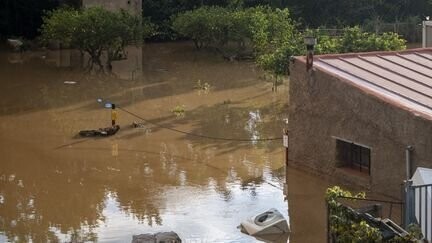
Heavy Mediterranean rains hit northeastern Spain this weekend, leaving two dead and one missing in Catalonia, while Barcelona recorded its wettest day in twenty years.
Two people have died and a third is missing after severe weather struck Catalonia starting Saturday at midday. The region's president, Salvador Illa, confirmed the second death on Sunday in a message posted on social media, expressing his condolences to the victim's family and praising the "tireless" work of firefighters and emergency services. The missing person is believed to have been swept away by a river in Pineda de Mar, a town north of Barcelona.
The Catalan Civil Protection agency issued a new Es-Alert on Sunday to residents of five regions: Vallès Oriental, Maresme, La Selva, Baix Empordà, and Gironès. This emergency message urged them to avoid all non-essential travel as long as the heavy rains continued. A similar alert had been sent to 20 regions on Saturday evening, recommending the suspension of all activities starting at 20 p.m.
The rainfall recorded overnight from Saturday to Sunday was exceptional. The Catalan meteorological agency Meteocat measured 190,8 liters per square meter in the Eixample-El Raval district, 170,3 liters on Diagonal Avenue—the highest total in eighteen years for that location—and 152 liters near the Badalona Museum, a record for the past twenty-one years. In El Raval, 3,4 liters fell in a single minute and 36,1 liters in half an hour. These figures are nearly double the 95,4 liters recorded in the same district during the event of March 24, 2017.
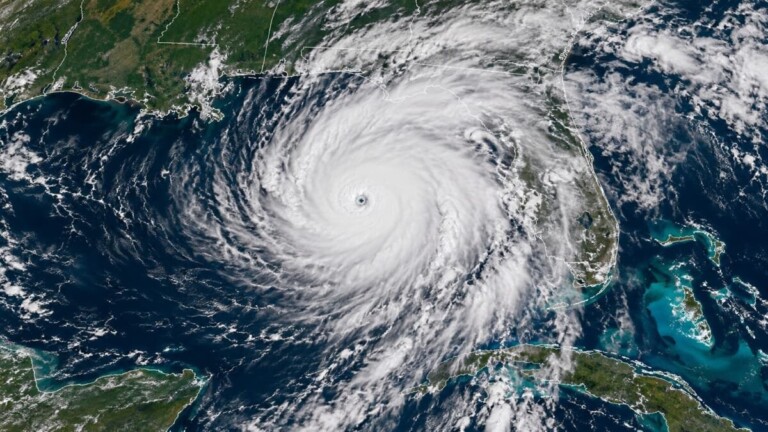
These rains are linked to the formation of a group of violent thunderstorms over the Mediterranean Sea , a phenomenon that fueled rains moving slowly towards northern Catalonia. Meteocat had warned that the total rainfall would be "exceptional both in intensity and geographical extent".
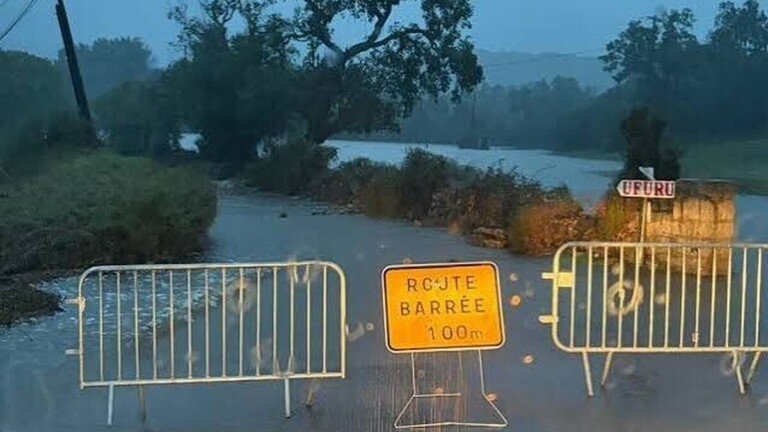
Hydrologically, the Catalan Water Agency reported that the lower reaches of the Besòs River had exceeded the danger threshold, with a flow rate reaching 520 cubic meters per second at Santa Coloma de Gramenet around 3:00 AM, raising fears of imminent flooding. At the same time, Catalan firefighters had received 682 calls, primarily for flooding. Those in Barcelona had recorded 910 calls and carried out 145 storm-related interventions before 7:30 AM. In Granollers, several people trapped in their vehicles had to climb onto their roofs to escape the rising waters.
The Basque Country was also affected on Saturday. The province of Biscay recorded 150 rain-related incidents, 137 of which were in Bilbao, mainly flooding and water accumulation on roads. In some parts of the old town, the water reached knee-deep, preventing residents from returning home. Disruptions were also reported in Getxo, Basauri, Laudio, Galdakao, Sestao, and Erandio, as well as a traffic interruption in the La Avanzada tunnels in Leioa.