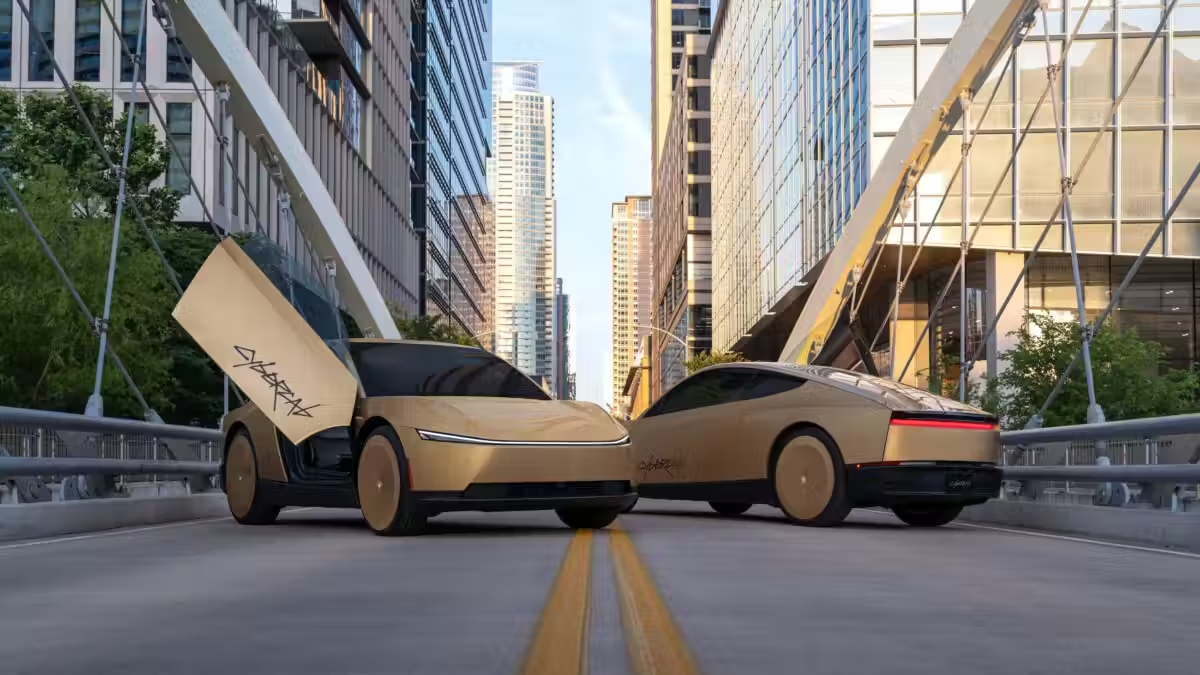
Tesla didn't have to wait long for its new autonomous vehicle to attract the attention of US authorities. Barely deployed on the streets of Austin, Texas, the Cybercab is already being reviewed by the federal agency responsible for road safety . The problem lies at the very heart of the concept: this car, designed to operate without a driver, lacks a steering wheel and pedals, even though these features are currently required by US safety standards.
Elon Musk's company is banking on the Cybercab to develop an autonomous taxi service and reduce the costs associated with chauffeured transportation. In the United States , however, manufacturers have a specific system that allows them to certify their vehicles' compliance before they are put on the market. Tesla has thus informed the federal agency of its project and intends to gradually increase the number of vehicles in operation.
Tesla faces regulations that have not yet kept pace.
But the regulatory framework poses a significant problem for the manufacturer. Current rules require vehicles to have a steering wheel and pedals, except when a specific exemption is granted. However, according to several American media outlets, Tesla has not applied for such an exemption for its Cybercab. The federal agency, for its part, maintains that it has been working for about a year on evolving the standards to take new technologies into account, but this review does not change the currently applicable requirements.
The rollout remains extremely limited for now. Tesla has reportedly produced around 1.000 Cybercabs, but only 45 are currently in use on the roads, in a restricted area of Austin, where the manufacturer is headquartered. This experimental phase allows authorities to observe the vehicle's operation while examining its compliance with existing regulations.
For Tesla, the stakes go far beyond these few dozen cars. The Cybercab is a cornerstone of its strategy for autonomous driving and driverless taxis. But this ambition runs up against a very real paradox: wanting to market a car designed to eliminate the need for traditional controls while regulations still require them. The future of autonomous vehicles will therefore depend as much on Tesla's technological advancements as on the ability of US authorities to adapt their rules without compromising safety standards.