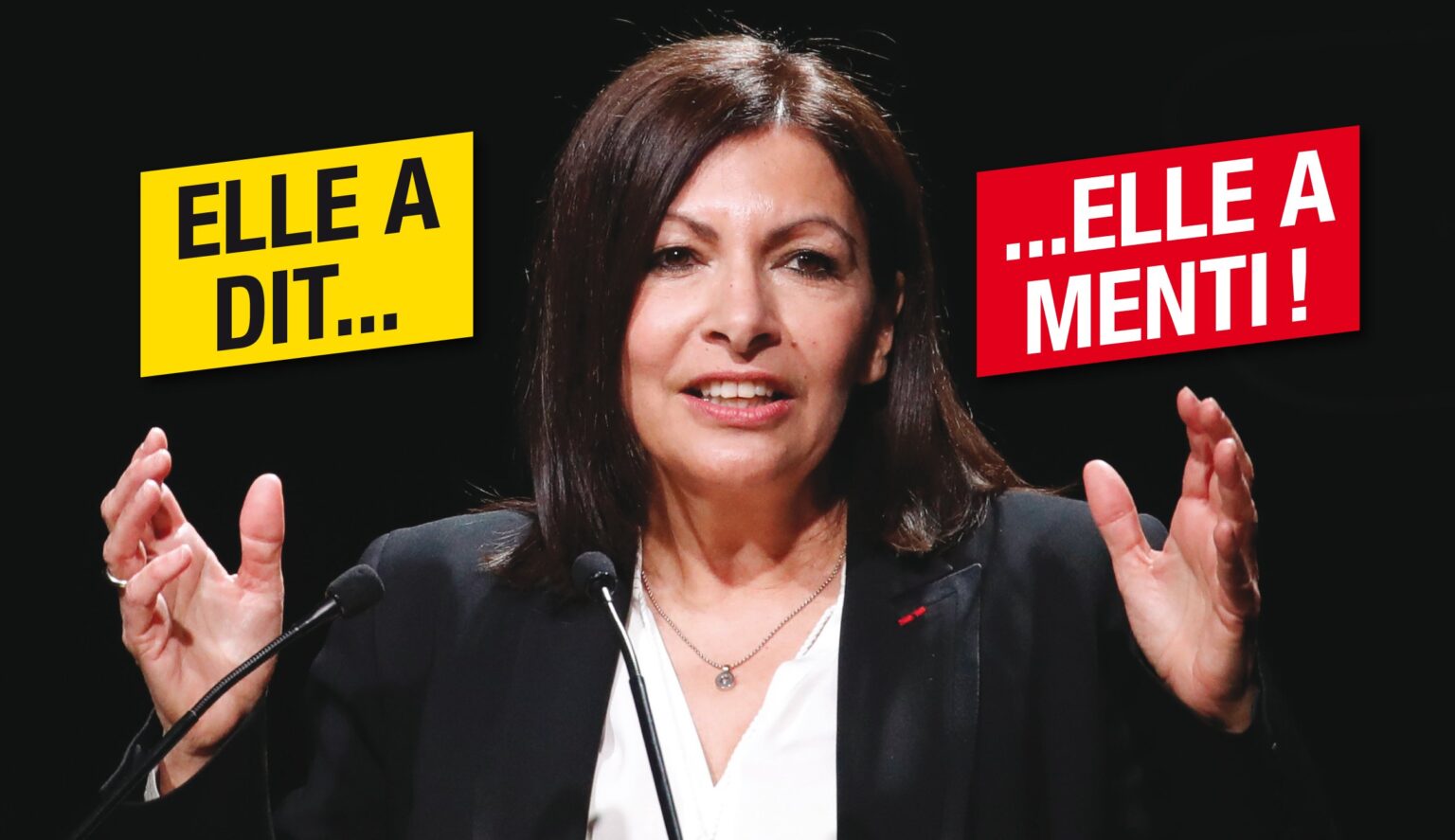
Since her election as mayor of Paris in 2014, Anne Hidalgo has made greening and tree protection a powerful symbol of her policies. She regularly affirms that Paris must be a "green city" where trees are cherished and proliferated. Last week, during a farmers' demonstration in Paris against the EU-Mercosur free trade agreement, the mayor of Paris even expressed her dismay after a protected tree was cut down by protesters in the 16th arrondissement, near the Porte d'Auteuil, reminding everyone that "anger and the right to protest do not justify such an act" and emphasizing the importance of protecting trees, a common good for Parisians.
However, the reality on the ground is far less idyllic. Since 2014, approximately 36,000 to 46,000 trees have been cut down in Paris for various reasons, revealing a striking contrast between Anne Hidalgo's very protective rhetoric about nature and the actions of the city hall.
Mass culls despite warnings and protests
Strangely, there are no comprehensive official figures on tree felling in the capital: the Paris City Hall does not publish an overall report on trees felled since 2014. The only available data concerns trees felled for health reasons since 2021, and it does not cover urban development projects, construction sites, or the effects of storms. To assess the true extent of the felling, one must therefore rely on a combination of public sources and journalistic cross-referencing.
Despite the lack of complete statistics, analyses and estimates show that between 36,000 and 46,000 trees have disappeared in Paris since Anne Hidalgo came to power, for all reasons combined.
Approximately 30,000 trees were cut down for "safety reasons"
The majority of trees removed each year are officially cut down for health or safety reasons. Paris has approximately 200,000 trees in public spaces, and each year, between 2,000 and 3,000 trees are felled because they are diseased, dangerous, or threaten infrastructure. According to the city hall, these removals are necessary for safety, despite objections from residents who refute this argument. Since 2014, between 27,500 and 33,000 "disease" or "dangerous" trees have been cut down.
Urban works and construction sites cause a real catastrophe
A significant proportion of tree felling is directly linked to renovation projects, urban development, and public works. Examples abound: the renovation of the area around the Eiffel Tower resulted in the cutting down of around twenty trees, while other redevelopment projects in squares, sidewalks, and residential neighborhoods have led to the inexplicable disappearance of thousands of trees. It is estimated that approximately 1,000 trees per year are lost due to this type of work, which translates to between 8,000 and 11,000 trees felled since 2014.
Tree felling related to weather events
Exceptional storms and thunderstorms also contribute to the destruction of Parisian trees. In 2025, for example, a violent storm severely damaged between 500 and 1,000 trees, which had to be removed for safety reasons.
A very contrasting assessment with the green image of the town hall
Anne Hidalgo continues to emphasize her goal of planting 170,000 new trees and her love of trees. However, these plantings often compensate for felling, and it is clear that the net result for the city's tree heritage is much more mixed. Tens of thousands of trees have disappeared since 2014, whether for health reasons, construction projects, or following storms, and greening projects are not always enough to restore the image of a "green" city.
Since 2014, Paris has lost between 36,000 and 46,000 trees , due to all causes. The city hall's rhetoric, which extols the love of trees and the greening of the city, stands in stark contrast to this reality. The fellings linked to sanitation projects, major construction work, and extreme weather events are numerous and visible, serving as a stark reminder that, despite promises, the city continues to see essential elements of its heritage disappear—a heritage that Anne Hidalgo has, according to her critics, completely "ravaged," as they eagerly anticipate the 2026 municipal elections.