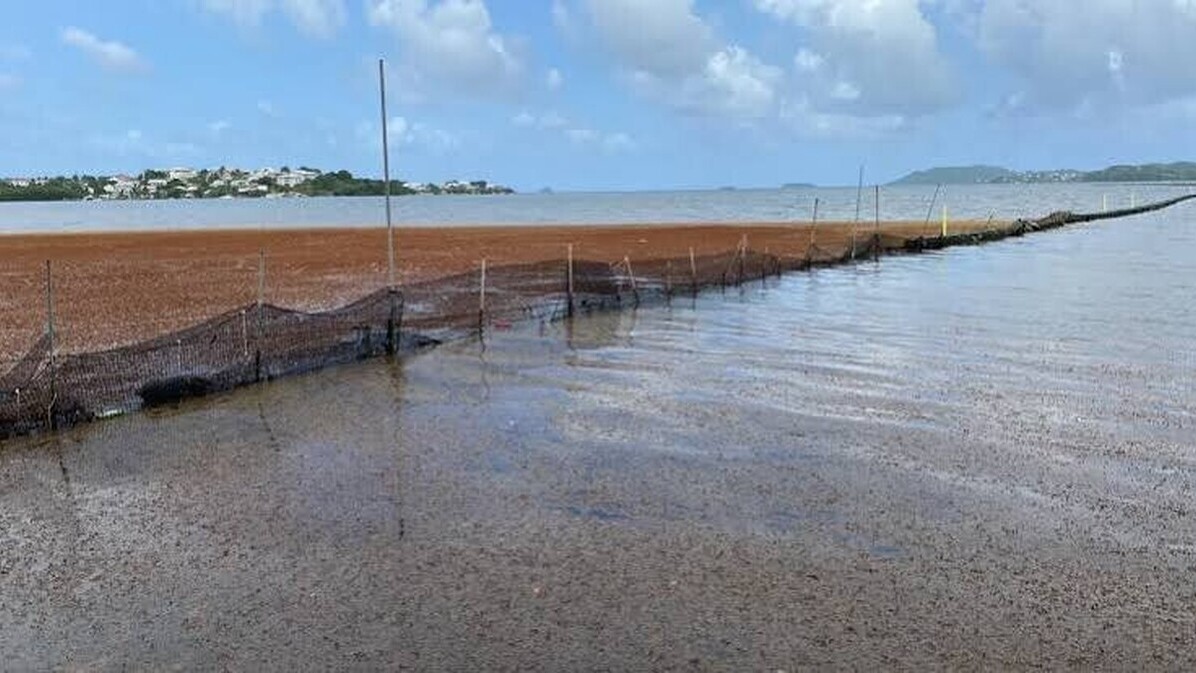
A delegation from the Advisory Council for the Outermost Regions (CCRUP) visited Robert Bay in Martinique to assess the impact of sargassum seaweed strandings on fishing, equipment, and the local population. Representatives from nine outermost regions are participating in this visit, which aims to prepare proposals to be submitted to European institutions.
In Robert Bay, heavily affected by the phenomenon, a dozen fishermen collect the seaweed by hand every day. It is then loaded onto a barge about forty meters long before being processed. The fishermen describe the operation as arduous and the damage to their boats as significant. Copper, engines, and electrical wiring are reportedly affected by the fumes produced during the decomposition of the sargassum.
Professionals facing economic and health losses
“Economically, this has a considerable impact on our resources and income. Aid is absolutely essential,” warns Jean-Michel Cotrebil, president of the Martinique fisheries committee. Some fishermen are also reportedly suffering from skin problems, including eczema. Léonard Raghnauth, president of the regional fisheries and marine aquaculture committee of French Guiana , believes that the resources currently mobilized are insufficient to address the crisis.
The president of the CCRUP, Ruben Farias, wants to accelerate the collection of seaweed and develop its processing through more automated methods. A request for temporary aid is to be submitted to the European Commission , while financial support is also being requested from the French government. Present in Martinique until Thursday, September 10th, the delegation must now translate the testimonies gathered on the ground into concrete proposals to provide a sustainable solution to the sargassum strandings.