The Lyon-based company Amoéba has signed an agreement with Syngenta to distribute its biological treatment against several diseases affecting cereals. This exclusive partnership allows the young French company to leverage the commercial power of the pesticide and seed giant to disseminate a solution presented as an alternative to conventional fungicides.
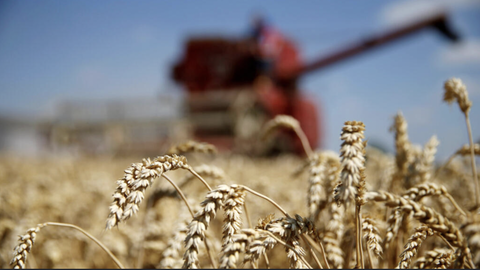
The biocontrol product developed by Amoéba uses natural mechanisms to protect crops against parasitic fungi. It specifically targets septoria leaf blotch and yellow rust, two major wheat diseases which, along with other cereal infections, affect between 9 and 12 million hectares annually. The trials required for its registration will be conducted jointly by the two companies.
Commercialization is expected by the end of 2028
Amoéba and Syngenta aim to obtain initial commercial authorizations in the third quarter of 2028, before launching sales at the end of the same year. Farmers could then begin using this biofungicide in the spring of 2029 on wheat, spelt, and triticale, a hybrid cereal resulting from a cross between wheat and rye.
Founded in 2010 in the Lyon metropolitan area, Amoéba develops solutions based on the use of amoebae, single-celled microorganisms. Under the terms of the agreement, Syngenta will market its treatment for all cereals, with the exception of corn, in the European Union, the United Kingdom , Ukraine, and Switzerland. For the French greentech company, this alliance represents a major step toward the industrial and international deployment of its technology.