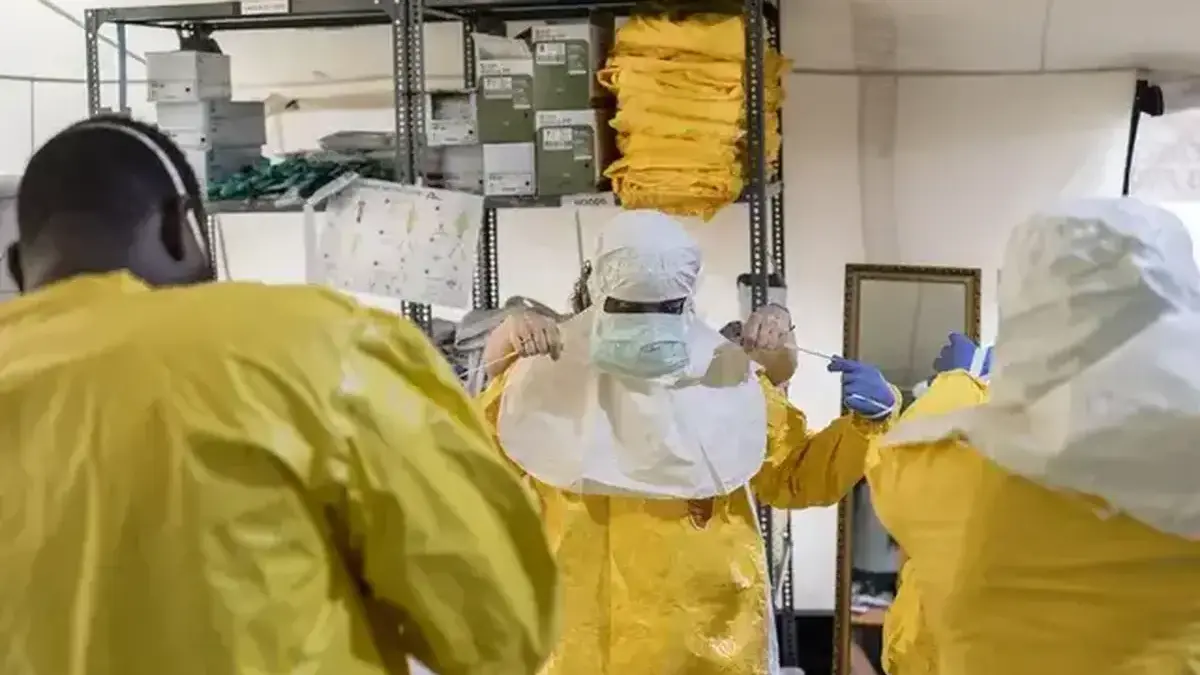
Kenya announced on Tuesday, October 6, its first recorded case of Ebola, followed by the patient’s death Monday night in a Nairobi hospital. According to Health Minister Aden Duale, this Kenyan national lived in the Democratic Republic of Congo and arrived in Kenya on Saturday after traveling through Uganda. He was placed in isolation and tested positive after symptoms appeared. Health authorities have issued a maximum alert to monitor potential new infections.
The priority is now identifying individuals who had contact with him. Twenty-eight contacts, including close relatives and healthcare professionals, have been located. Authorities are also searching for twenty-three other passengers who took his flight from Uganda. According to Patrick Amoth, head of the Ministry of Health, those concerned must remain in isolation for twenty-one days and obtain a negative test result before being released. Their identification does not mean they are infected.
An outbreak originating from the DRC mobilizes neighboring countries
This death occurs as the DRC faces its seventeenth Ebola outbreak, described as the deadliest in its history. According to data from Congolese authorities reported by Le Monde, approximately 8,300 cases and over 4,000 deaths have been recorded. Declared in the eastern part of the country in mid-May, this outbreak has also resulted in cases in Uganda and France. Kenya thus becomes the fourth country to report an infection in this episode.
Kenyan authorities announced that the deceased will be buried within twenty-four hours following his death, in accordance with health safety protocols. The case discovered in Nairobi highlights the coordination between the countries involved and the monitoring of patient movements. At this stage, the information communicated indicates only one identified case in Kenya. Contact tracing and monitoring should help determine if others have been infected and limit potential spread.