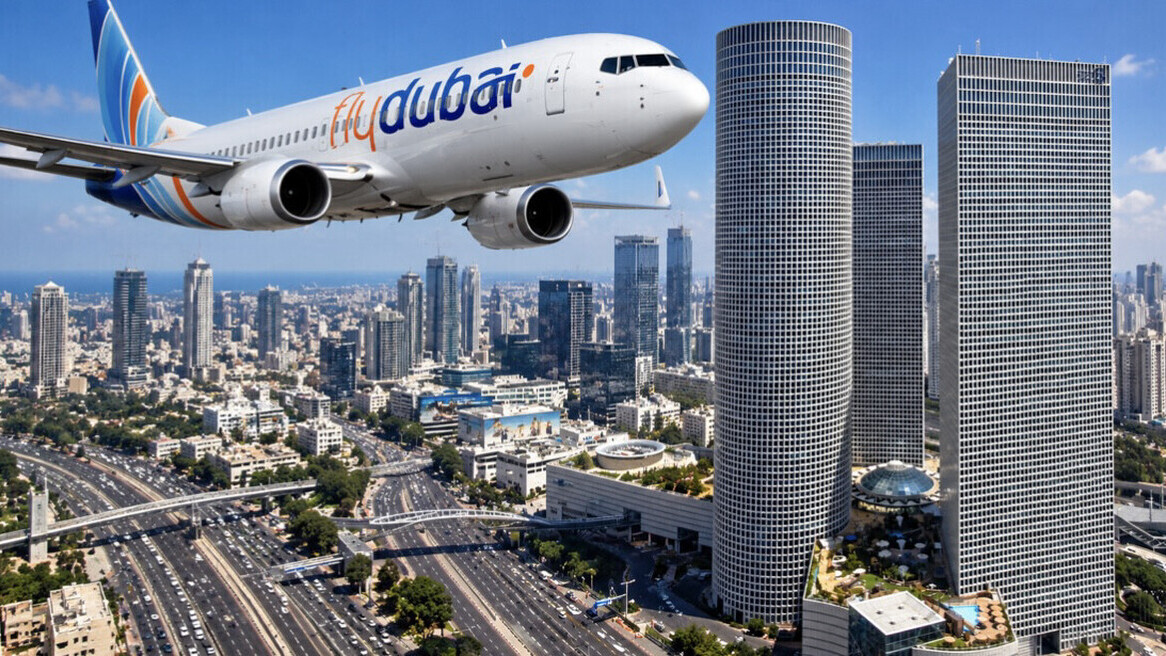
The investigation into the attempted attack aboard Flydubai flight FZ1073 is taking a new turn. Hamam Al-Hammami, the 29-year-old Omani co-pilot suspected of attacking the captain before attempting to take control of the Boeing 737 MAX, reportedly had a much more specific objective than simply causing the plane to crash: he allegedly planned to crash it into the Azrieli Towers in Tel Aviv, according to new information attributed to a senior Emirati official. The hypothesis under consideration is that of an attack inspired by September 11, 2001.
These revelations provide new details about the attempted attack on the Flydubai flight bound for Israel, during which the captain was seriously injured. The authorities of the United Arab Emirates have now officially classified the incident as an attempted terrorist attack.
The Azrieli Towers were reportedly among the targets
According to new elements of the investigation, Hamam Al-Hammami planned to neutralize the Indian captain before seizing control. He then intended to continue the flight to Israel and steer the aircraft into a high-rise building. The Azrieli Towers in Tel Aviv were reportedly among the considered targets.
The parallel with the September 11, 2001 attacks is directly mentioned in the emerging information from the investigation. The presumed objective was thus to turn the airliner into a weapon against a target located in the heart of Tel Aviv. At this stage, however, this specific target is based on information attributed to a senior Emirati official and has not been publicly confirmed by the UAE prosecutor’s office.
The captain attacked with an emergency axe
The sequence of the attack is now better established. On September 30, while flight FZ1073 was en route from Dubai to Tel Aviv with over 170 people on board, the co-pilot attacked the captain in the cockpit. The UAE Attorney General, Hamad Saif Al-Shamsi, confirmed that an emergency axe present in the cockpit was used and that the co-pilot attempted to take control of the aircraft.
The plane suddenly lost altitude. However, the captain managed to resist long enough to allow the cockpit to be opened. Passengers and crew members then subdued the co-pilot. Two other Flydubai pilots on board took control, and the aircraft ultimately made an emergency landing in Tabuk, Saudi Arabia.
Mossad, Saudi, Omani, and American services: an international investigation in Abu Dhabi
The investigation is now continuing in Abu Dhabi under the authority of Attorney General Hamad Saif Al-Shamsi. Mossad agents and Israeli aviation specialists are reportedly participating alongside representatives from Saudi and Omani intelligence services. At least two American representatives are also involved in the investigations.
Israeli investigators are also expected to participate in the co-pilot’s interrogation. One objective is to determine whether Hamam Al-Hammami planned the attack alone or received external assistance. So far, no public evidence indicates he acted on orders from a terrorist organization. Israeli officials currently favor the hypothesis of individual radicalization.
Previously considered a security risk in Oman
Hamam Al-Hammami’s professional background is now a major focus of the investigation. While working for Oman Air, he was reportedly already considered a security risk. Extremist content was found in his possession when he was a trainee co-pilot in 2024. He was then removed from flight duties and assigned to an administrative position.
His career after Oman Air is also under review. Royal Air Maroc confirmed that Al-Hammami underwent a three-month theoretical training in 2025 as part of a recruitment process but specifies that his application was ultimately rejected. He then joined Flydubai.
This timeline now raises a very concrete question: how could a pilot previously removed from cockpits for security concerns be recruited by another airline and assigned to flights to Israel? A Gulf diplomat states he passed the usual security checks before being hired by Flydubai, though the exact scope of these checks is unknown.
The co-pilot’s exact plan remains to be established
The Emirati authorities have taken a significant step by officially classifying the incident as an attempted terrorist attack. Hamad Saif Al-Shamsi established that the co-pilot attacked the captain and tried to seize control. However, the plan to strike the Azrieli Towers and the various stages of its preparation remain elements reported within the investigation, not definitive judicial conclusions.
The investigations must now determine when the plan was conceived, whether the co-pilot had chosen his target before joining Flydubai, and if he had accomplices. They must also explain how his past at Oman Air did not prevent his recruitment and flights to Israel. Flight FZ1073, which initially raised many questions about the co-pilot’s motives, is now officially treated by the UAE as an attempted terrorist attack.